
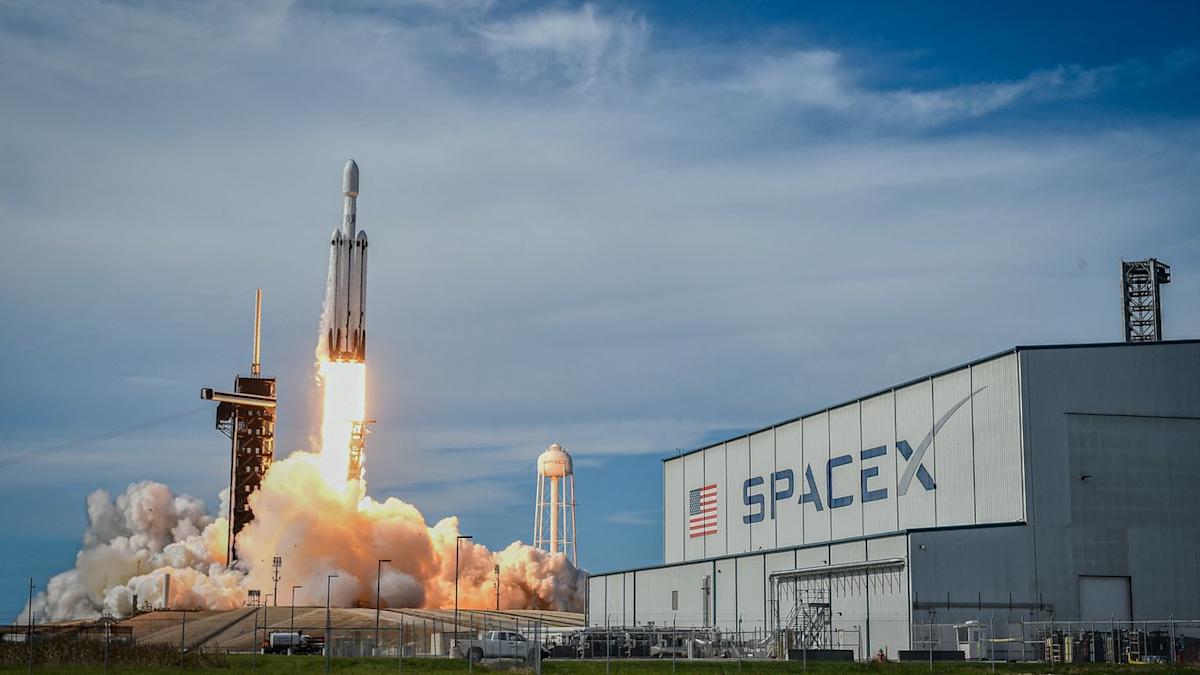

SpaceX reportedly targets IPO and tests $800B valuation
SpaceX might finally be ready for liftoff. Not another Starlink batch or Starship test — an actual debut on the public markets, with a timeline and a sticker price attached.
Elon Musk’s company has, according to The Information, been telling investors to circle the second half of 2026 for a potential IPO — all while chief financial officer Bret Johnsen says the company is lining up a secondary share sale that values the business at about $800 billion, roughly double the price tag buyers agreed to in a tender earlier this year, per the Wall Street Journal. Bloomberg, however, says that some of those insider sales may actually clear at about $300 a share, which pencils out closer to $560 billion, making this as much about negotiating posture as it is about a done deal.
The scenario was discussed at a board meeting at Starbase in Texas, but this is still term-sheet territory, not prospectus territory, and the final plans will depend on how many sellers and buyers actually show up.
SpaceX has made a habit of semi-regular tenders so that employees and early backers can turn paper wealth into actual money without waiting for a listing. The company has been running some version of these insider sales roughly every six months, a kind of pressure valve for a cap table that keeps inflating in private.
An $800 billion target rips SpaceX out of the $250 billion–$400 billion band where it’s been trading in private deals and drops it into mega-cap territory, shoulder to shoulder with companies that are legally required to publish audited financials every quarter. This move would also nudge SpaceX past OpenAI’s recent $500 billion valuation and have it reclaim the (unofficial) crown for the world’s most valuable startup — taking the title away from Musk’s rival, OpenAI CEO Sam Altman.
The IPO sketch wrapped around that purported $800-billion number is ambitious. For years, the working assumption in banker decks — largely via hints from Musk himself — was that Starlink would go out first, offering a neat satellite-internet story, while the rocket business stayed private. The latest plan being shown to investors points the other way: a combined listing that folds rockets, Starlink, government contracts, and all the rest into a single “space infrastructure” pitch and asks public markets to price the bundle at SpaceX-scale multiples.
Musk has said the space business would list when its growth was “smooth and predictable.” Starlink is about as close as the company gets to that description; analysts now peg its annual run rate around $12 billion from millions of subscribers paying for broadband in war zones, farm fields, cruise ships, and places terrestrial telecoms never bothered to reach. Internally and on his social media site, X, Musk has been bragging that SpaceX’s commercial space revenue now rivals or exceeds what NASA spends on comparable launch and services — Musk has claimed his company will have about $15.5 billion in revenue in 2025 — and the launch cadence already makes national space programs look part-time.
Leave a Comment
Your email address will not be published. Required fields are marked *