Hollywood, already on shaky economic ground, shudders at the prospect of a mega-Netflix
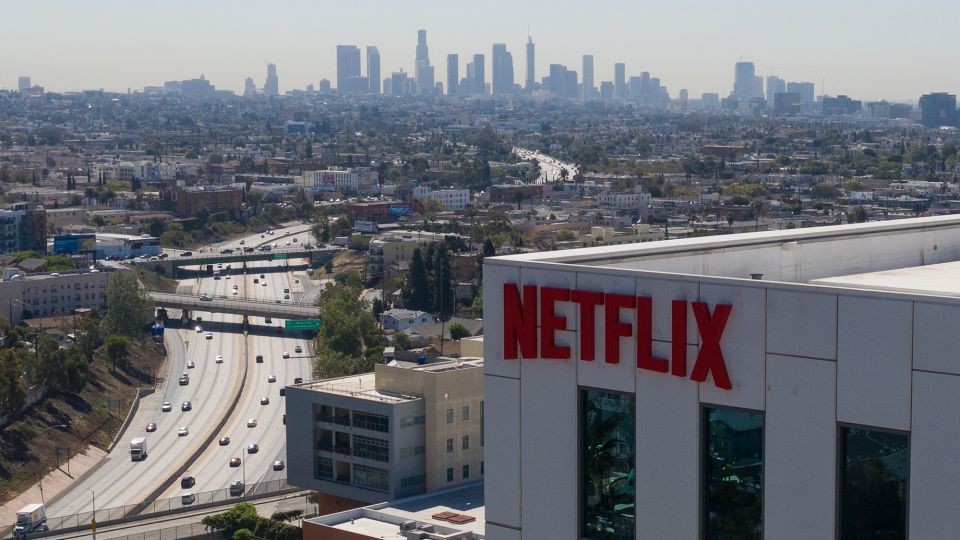
For some in Hollywood, Netflix, the king of streaming, represents an existential threat. – Bing Guan/Bloomberg/Getty Images
The business of Hollywood was in trouble long before the earth-rattling news that Netflix had inked a $72 billion takeover of Warner Bros. And while the deal is widely seen as a coup by Netflix, once a scrappy startup that had to fight to be taken seriously, it also threatens to further shrink the industry and raise prices for consumers.
Producers, actors, writers and theater owners are not thrilled about the prospect of a mega-Netflix dominating show business, with major unions and trade groups expressing deep concern about the potential impact on jobs and communities.
“The world’s largest streaming company swallowing one of its biggest competitors is what antitrust laws were designed to prevent,” the Writers Guild of America, the union representing Hollywood writers, said Friday. “The outcome would eliminate jobs, push down wages, worsen conditions for all entertainment workers, raise prices for consumers, and reduce the volume and diversity of content for all viewers.”
Netflix triumphed over Paramount and Comcast late Thursday in a bidding war for Warner Bros., surprising many in the industry who saw Paramount as a shoo-in.
“Holy f—k. Netflix got WBD,” one Paramount staffer said in a text to CNN on Thursday night.
David Zaslav, the CEO of Warner Bros. Discovery, CNN’s parent company, attributed the decision to “the realities of an industry undergoing generational change.”
The entertainment industry has experienced a series of upheavals in recent years. Studio consolidation accelerated in the late 2010s, leading to fewer projects being greenlit for production. The Covid-19 pandemic halted production for months, pushing studios to delay or cancel projects, leaving thousands out of work. Movie theaters faced an existential crisis during lockdowns, and have yet to reach pre-Covid audience levels. At the same time, TV and film productions have been increasingly moved out of the United States entirely to take advantage of lower labor costs and tax incentives.
All of that has rapidly shrunk the entertainment economy. Now, many worry the proposed Netflix deal will further erode their job security.
“Producers are rightfully concerned” about the potential deal, the Producers Guild of America said in a statement. “Our legacy studios are more than content libraries — within their vaults are the character and culture of our nation.”
SAG-AFTRA, Hollywood’s biggest actors union, also expressed concern about the potential deal, saying it raises “many serious questions” about the future of the entertainment industry, “especially the human creative talent whose livelihoods and careers depend on it.”
Theater owners, in particular, dread the idea of negotiating future film releases with the company that built its business partly on bypassing theaters to bring original content directly to viewers. The big screen would face “an unprecedented threat,” according to Cinema United, a trade association that represents more than 30,000 movie screens in the United States.
“Netflix’s stated business model does not support theatrical exhibition,” Cinema United President and CEO Michael O’Leary said in a statement. “In fact, it is the opposite. Regulators must look closely at the specifics of this proposed transaction and understand the negative impact it will have on consumers, exhibition and the entertainment industry.”
CEO of Warner Bros. Discovery David Zaslav and Netflix Co-CEO Ted Sarandos attended the AFI Awards in February in Los Angeles. – Michael Kovac/Getty Images
Netflix has been pushing back on that argument.
“We’ve released about 30 films into theaters this year, so it’s not like we have this opposition to movies in theaters,” Netflix co-CEO Ted Sarandos said in a call with Wall Street analysts Friday. “My pushback has been mostly in the fact of the long, exclusive windows, which we don’t really think are that consumer-friendly.”
He added: “Right now, you should count on everything that is planned on going to the theater through Warner Bros. will continue to go to the theaters through Warner Bros.”
Netflix only occasionally releases its films to theaters to meet the criteria for Oscar nominations. Its business model has always been based on maintaining a giant library of movies and TV shows that viewers can access anywhere, anytime.
By acquiring Warner Bros., Netflix would gain access to some of Hollywood’s most beloved and lucrative titles, including “Batman” and “Harry Potter,” as well as a deep, 100-year-old library of Hollywood classics like “Casablanca” and “The Wizard of Oz.” At the same time, it would control decades’ worth of network TV shows like “Friends” along with all of HBO’s prestige programming, such as “Game of Thrones.”
On top of all that, the deal would effectively allow Netflix, the streaming king, to wipe out its second-largest competitor after Disney: HBO Max.
“This is not a win for consumers,” Ross Benes, a senior analyst at eMarketer, told CNN. “Netflix has already aggressively raised prices, increased ad load, and stopped people from sharing passwords. Absorbing a competitor with strong content will only lead to its service becoming more expensive and give consumers less choice.”
It could also be bad news for the tens of thousands of workers employed by the film and TV industry. Benes said the deal would likely lead to layoffs and reduce the number of companies willing to spend heavily on TV and movies.
“This contracts the industry,” he said, while noting that the deal is far from done.
On Thursday, as news emerged that Netflix was the top bidder for Warner Bros., an anonymous group of “concerned feature film producers” sent an open letter to Congress, warning of a potential economic and institutional “meltdown in Hollywood” if Netflix were to succeed, according to Variety.
The filmmakers argued that Netflix would “effectively hold a noose around the theatrical marketplace.”
Paramount, on the other hand, took a different approach in its bid for Warner Bros., wooing talent with a theater-forward strategy.
Despite changes in the entertainment landscape, creative talent both in front of and behind the camera are eager for audiences to experience their work in theaters — not from the couch. It’s one of the reasons why Netflix’s top creators, the Duffer Brothers — best known for writing and producing the series “Stranger Things” — are jumping ship from Netflix to Paramount.
Paramount has also inked deals with some of the biggest names in movies over the past few months, including Tom Cruise, Will Smith, “Wicked” director John M. Chu and director James Mangold.
For more CNN news and newsletters create an account at CNN.com
Leave a Comment
Your email address will not be published. Required fields are marked *



Leave a Comment
Your email address will not be published. Required fields are marked *