

Agency will allow railroads to reduce human track inspections and rely more on technology
The nation’s freight railroads are going to be able to try relying more on technology and inspect their tracks in person less often after the federal government approved their waiver request on Friday.
The Association of American Railroads trade group asked for the relief from inspection requirements that were written back in 1971 because railroads believe the automated track inspection technology they use today is so good at spotting problems early that human inspections aren’t needed as frequently. They say that extended tests that BNSF and Norfolk Southern ran show that safety actually improved even when human inspections were reduced from twice a week to twice a month.
The Federal Railroad Administration didn’t go quite that far in its decision, but the agency said railroads will be able to cut inspections down to only once a week under the approved waiver.
The railroads had also asked for permission to have up to three days to repair defects identified by the automated inspections. But the Federal Railroad Administration said any serious defects in the tracks must be repaired immediately and all defects should be addressed within 24 hours.
Stay up to date with the news and the best of AP by following our WhatsApp channel.

Union says technology can miss problems
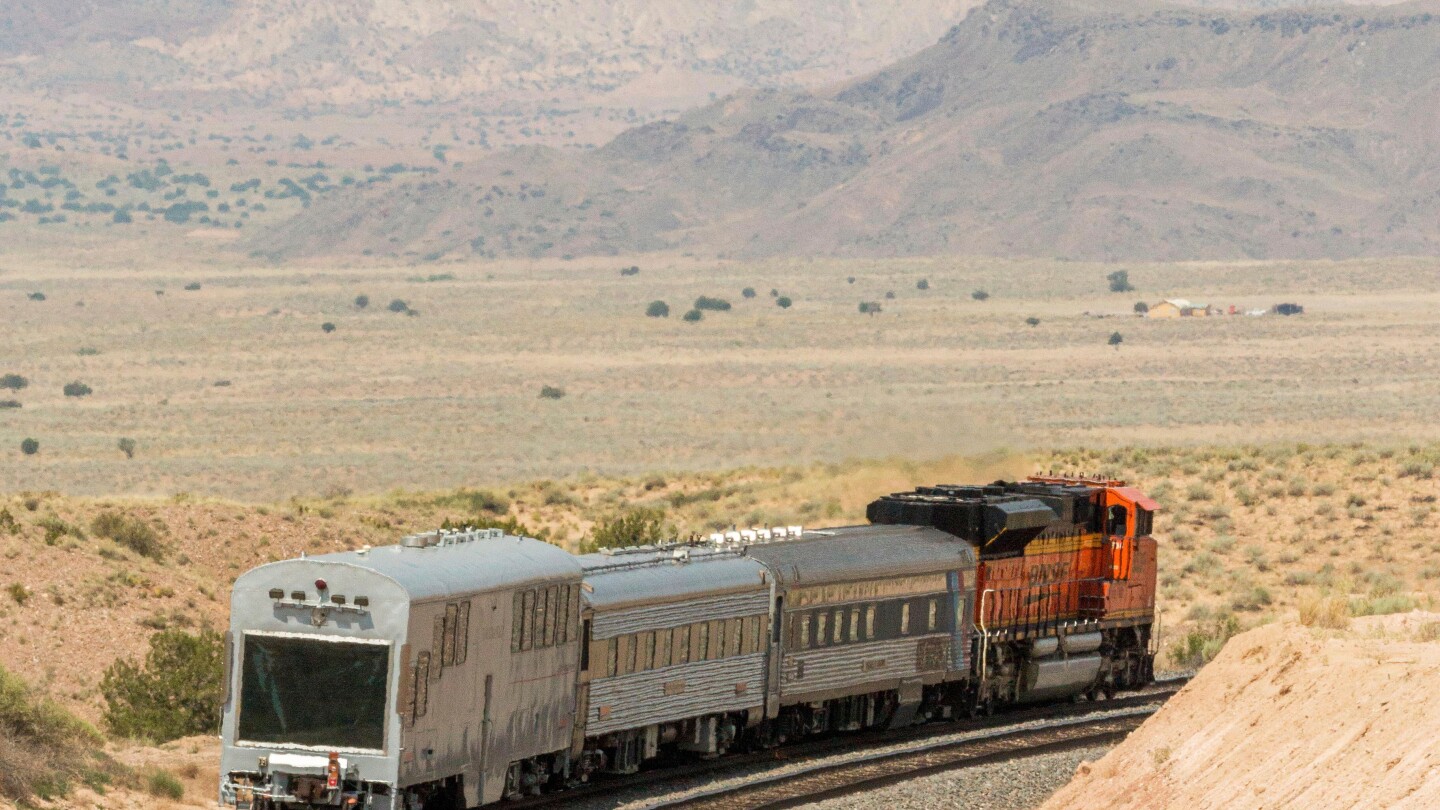
These automated inspection systems use an array of cameras and lasers installed either on a locomotive or on a railcar that can be pulled as part of a train to assess whether the tracks are moving out of alignment or shifting. But the union that represents track inspectors says the technology can’t detect things like the rock underneath the track shifting, vegetation growing into the path of the trains, a crack in the rail or railroad ties rotting out. Plus, inspectors can spot a combination of small defects that might together derail a train where the machine might not register a problem, the union says.
“This is everyday defects across the entire country that we find through visual inspections that cannot be detected by this machinery,” Brotherhood of Maintenance of Way Employes Division union President Tony Cardwell said. “And that technology is not there. It has been here for 30 years. It hasn’t really advanced much at all. It’s a glorified tape measure.”
The Brotherhood of Maintenance of Way Employes Division union that represents track inspectors acknowledges that this technology does help spot problems. But the union says that this automated inspection equipment should supplement — not replace — human inspections because reducing track inspections would increase the risk of derailments.
The railroads counter that even if these systems can’t see the ballast shifting under the tracks or the ties starting to rot, the system will notice the symptoms of those problems because the track geometry — basically the alignment of the tracks — will be affected when those things happen.
“What it is looking at is the ultimate performance. If those components are doing their job, then the track geometry is being maintained. If they’re not doing their job, the track geometry is not being maintained,” said Mike Rush, the Association of American Railroads’ senior vice president of safety and operations.
Companies say technology is more effective
BNSF railroad said when it was arguing with the Federal Railroad Administration about whether their test should be extended that the “technology has proven to be far more sensitive and effective at detecting geometry defects on BNSF’s network than the regime of manual visual inspections mandated by the historic regulations.”
Over two years of testing, manual inspections detected only 0.01 defects per 100 miles, compared with the section of the railroad where the test was being run where the combination of the technology and reduced inspections found 4.54 defects per 100 miles.
The Federal Railroad Administration agreed that tracks don’t need to be inspected visually as frequently when these automated track inspection systems are used regularly.
Cardwell and the union’s safety director, Roy Morrison, think that’s a bad idea. They said that one of the benefits of frequent inspections is that the inspectors become intimately familiar with their territories, which helps them spot subtle changes. If they aren’t out on the tracks as often, it may be harder to spot problems, they said.
“A track inspector who’s out on his mainline track twice a week, he knows that track inside out, and a lot of times he’ll spot a defect without even knowing what he’s looking at yet,” Morrison said. “He’ll get out of the truck and say, hey, there’s something wrong here. Take some measurements and go, OK, this is what’s going on.”
But the railroads say that freeing up inspectors from some of these mandated track inspections will allow them to focus more on switches and other equipment that must be inspected manually. Plus, Norfolk Southern noted in its comments on the request that even if regular inspections aren’t being done as often, special inspections will still be done regularly anytime there is a major storm or flooding in a certain area to make sure the tracks weren’t affected.
Norfolk Southern said that during its 18-month test of reducing inspections while using the technology, the railroad saw improvements in areas that the automated system can’t find because inspectors were free to spend more time focused on those areas.