ATLANTA (AP) — With data centers flooding into Georgia, utility regulators face a big decision: Should they let Georgia Power Co. spend more than $15 billion to increase its electricity capacity by 50% over the next six years to serve computer complexes? Or could the utility overbuild and stick other ratepayers with the bill?
It would be one of the biggest build-outs in the U.S. to meet the insatiable electricity demand from developers of artificial intelligence. The largest subsidiary of Atlanta-based Southern Co., Georgia Power said in testimony filed last month that the build-out will boost the state’s economy and “allow Georgia to contribute to the nation’s focus on the global importance of artificial intelligence and the digital economy.”
“Given the number of companies interested in doing business in Georgia and the amount of customer load with signed contracts or in advanced discussions, it is important to continue moving forward with support for this great growth opportunity,” company officials said in testimony.
But electricity bills have emerged as a potent political issue in Georgia and nationwide, with grassroots opposition to data centers partly based on fears that other customers will subsidize the power demands of technology behemoths.
“I think what’s happening in Georgia is in some sense a perfect microcosm of what’s happening nationwide,” said Charles Hua, executive director of Powerlines, a nonprofit group that seeks to increase public involvement in utility regulation. “You’re seeing electricity demand grow at the fastest rate in decades, and you’re seeing electricity prices rise at the fastest rate in decades.”
A growing political issue
Electricity costs were a key issue in last month’s elections for governor in New Jersey and Virginia, both data center hot spots. On Tuesday in North Carolina, Democratic Gov. Josh Stein cited concerns about data centers as one reason for opposing a 15% rate increase sought by Duke Energy for two utilities.
In Georgia, the five elected Republicans on the Public Service Commission will decide on Georgia Power’s proposal weeks after voters delivered a stinging rebuke to GOP leadership, ousting two incumbent Republicans on the panel in favor of Democrats by overwhelming margins. Those two Democrats won in campaigns that centered on six Georgia Power rate increases commissioners have allowed in recent years, even though the company agreed to a three-year rate freeze in July.
After hearings next week, commissioners are scheduled to take a final vote Dec. 19. The two new Democrats won’t take office until January and current commissioners denied a request by opponents to postpone the decision until then.
Brionte McCorkle of Georgia Conservation Voters, a group that advocates for carbon-free energy and supported the Democrats, fears the vote will be one last gift from the all-Republican commission to Georgia Power.
“It would be a slap in the face for the commission to rush through this proposal, and give the power company everything it wants,” said McCorkle “It’s just not listening to what the people have said loud and clear.”
80% of new capacity for data centers
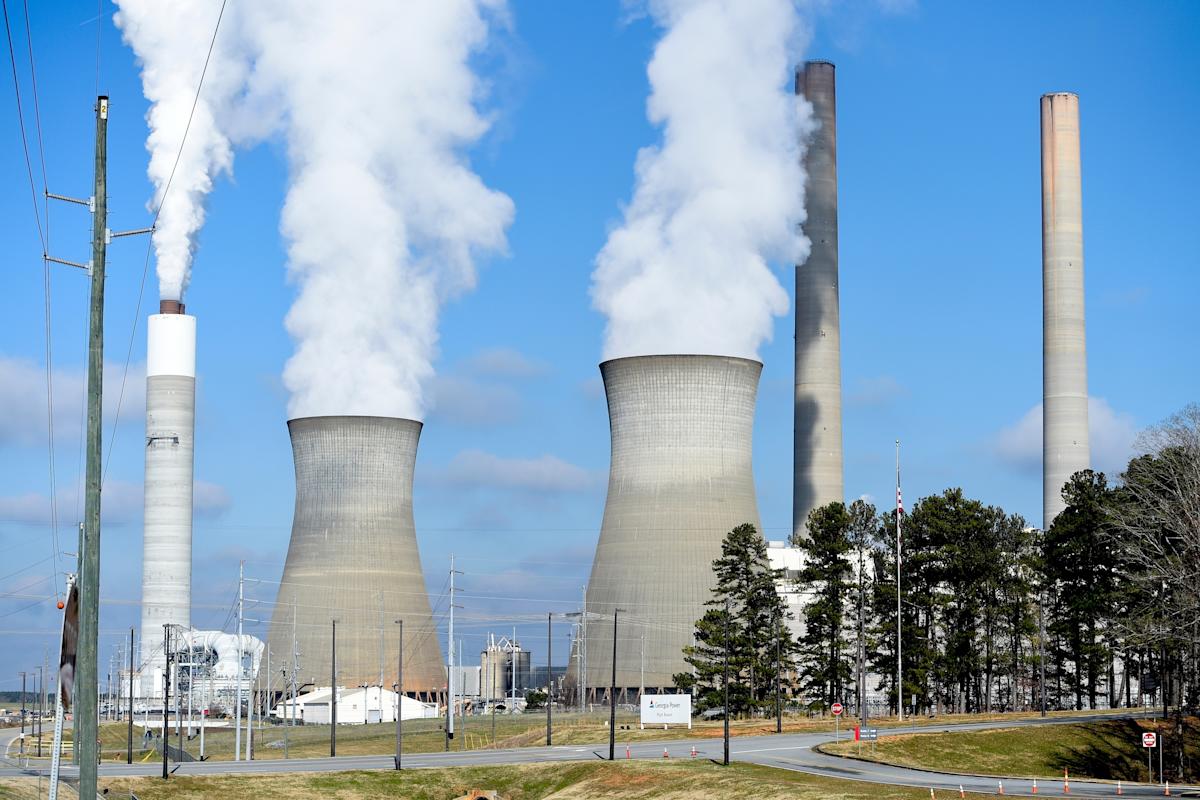
Georgia Power, with 2.8 million customers, projects the largest percentage increase in electricity demand over the next five years of any region but Texas. That’s according to an analysis by power consultant Grid Strategies of forecasts filed with federal officials. The utility says it needs 10,000 megawatts of new capacity — enough to power 4 million Georgia homes — saying 80% of that would power data centers. That’s in addition to the 3,000 megawatts the commission approved in 2024 after an unusual mid-cycle request by Georgia Power.
Whether the forecast is accurate and who will pay the bill if data center customers don’t materialize is at the heart of the decision. Commissioners in January adopted rules meant to make sure data centers pay the costs of building new power plants and transmission lines they need. But if Georgia Power overbuilds and there are no data centers to pay, other customers could shoulder those costs.
“The whole argument is premised on the idea that if we get all these new customers, then we can take costs and spread it out over more people and therefore put downward pressure on prices,” Hua said. “Well, if you don’t actually end up getting all those customers and you built all this new infrastructure, then you could see a scenario where you actually drive bills through the roof even more.”
The ultimate potential costs are unknown because Georgia Power’s estimates are partially a trade secret that the company won’t release. For example, the $15 billion price tag only covers construction costs for 80% of the current 10,000 megawatt request, and it doesn’t include any of the borrowing costs, which customers must also pay. The price of the 3,000 megawatts approved in 2024 remains entirely secret. Because of the rate freeze, ultimate costs won’t become clear until 2028, the next time commissioners set electricity rates.
Will customers pay?
Public Service Commission staff members who have analyzed the request say Georgia Power will need $3.4 billion a year in additional revenue by 2031, which could equal out to $20 a month for a residential customer. The company replied that such a claim is “flatly incorrect.”
“These customers pay upfront the full costs of serving them, commit to long-term contracts, and provide financial guarantees,” said spokesperson Matthew Kent. “That means residential and small business customers are protected from cost increases tied to these projects.”
Staff members recommended that the commission allow Georgia Power to build capacity for new large customers only after they have signed contracts starting with 3,100 megawatts of capacity and up to 7,400 megawatts total for contracts signed by March 16. That recommendation would also allow the commission to avoid approving contracts for some new multibillion-dollar natural gas-fired power plants. Costs for such construction have risen sharply, partly because equipment manufacturers are having trouble meeting demand.
The company reacted sharply against that recommendation, saying “it would significantly inhibit” its ability to sign up new data centers, hurt economic development, and reduce the opportunity to lower rates.
The company and staff could negotiate a settlement before the Dec. 19 vote. McCorkle said any outcome should focus on protecting customers.
“What we don’t want is a form of corporate welfare, where individual citizens are paying for the benefit of big mega corporations like Meta and Amazon,” she said.


Leave a Comment
Your email address will not be published. Required fields are marked *