
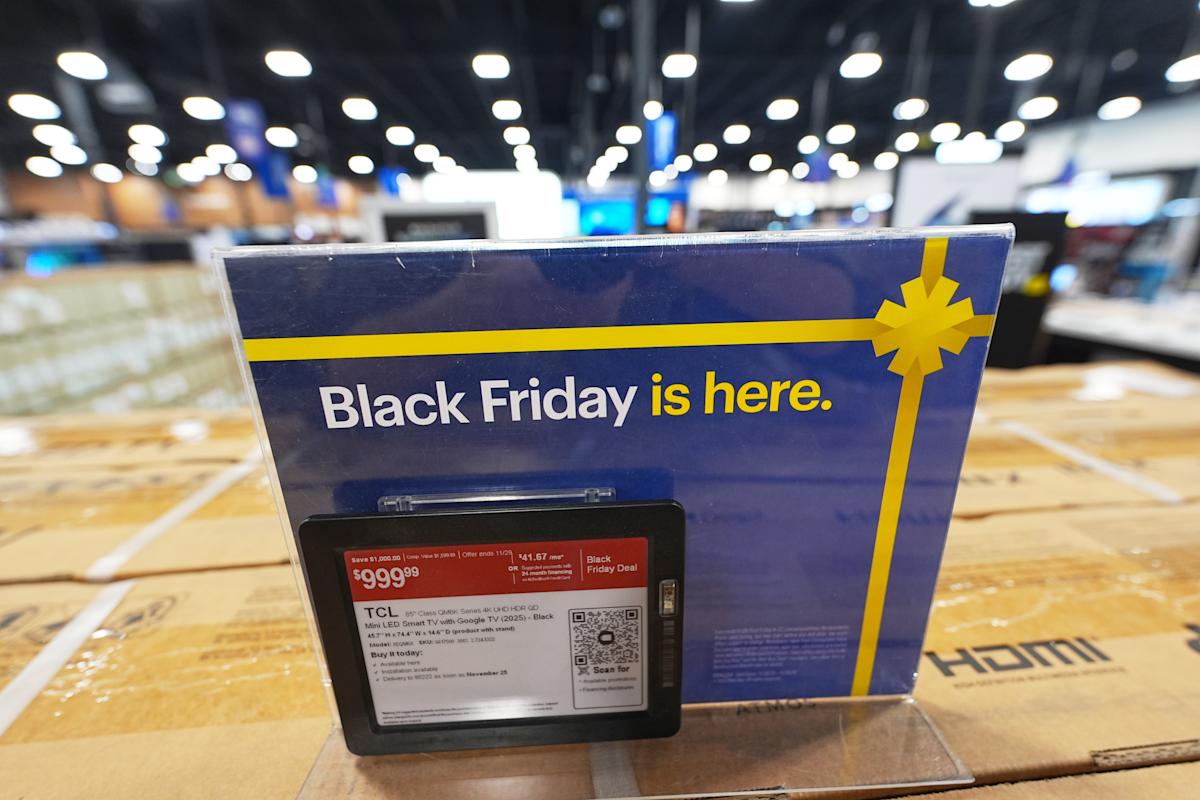

Buy now, pay later is booming, and experts say the risks are growing
Buy now, pay later (BNPL) is likely the easiest borrowing experience most consumers will ever have.
With an option at checkout to split your purchase into a down payment and subsequent installment payments every two weeks or so, you get the merch and an easy-pay plan all at once.
It’s a pitch that consumers are embracing. Adobe for Business reports that more than $10 billion in holiday purchases will be made with BNPL, up 9% from last year. Half of holiday shoppers said they’ll use BNPL this year, according to a PayPal survey, and 1 in 4 Gen Z and millennial shoppers use it regularly.
So what’s the problem with buy now, pay later?
Read more: Buy now, pay later vs. credit cards: Which should you use for your next purchase?
BNPL is commonly a “pay in four” installment loan, and in those instances, is commonly interest-free. For example, a shopper may buy a $400 item, pay $100 at checkout, and then make three additional payments of $100 every two weeks.
BNPL is “unquestionably the most popular with consumers under the age of 40,” Kevin King, vice president at LexisNexis Risk Solutions, told Yahoo Finance in an interview. “And then consumers with damaged credit are more likely to find buy now, pay later appealing in part because it offers far more affordable access to credit than some other, more traditional credit products like credit cards or installment loans do.”
King said that BNPL is being marketed to serve nearly every U.S. consumer segment, so credit profiles obviously vary. That means there is a wide variance in interest rates.
“But generally speaking, we’re talking about interest rates that are far lower than what any U.S. consumer with their given credit history might be able to access when they’re looking at a line of credit, a credit card, or a loan,” he added.
Every BNPL purchase is an individual loan, so if a holiday shopper buys 10 items with it, rather than with a credit card, that’s 10 individual loans, each with its own interest rate, possible late fees, and perhaps additional charges.
“Most consumers take advantage of whatever company is being offered at the point of checkout, whether it’s more commonly online or in person,” King said. “That means these loans get spread across many different providers. And it’s difficult for consumers to keep track of how many loans they have open. When are those payments occurring? That creates this shadow debt that has a lot of risk.”
When the loan payments are drafted from a shopper’s checking account, King said it may be too late to realize they overspent: “They find out that their rent payment just bounced, because the day before they wrote that rent check, unbeknownst to the consumer, they had three buy now, pay later payments due on different loans. That money was withdrawn from the checking account, and now they don’t have the money to pay rent.”
Read more: Why you should think twice about using buy now, pay later to cover holiday expenses
On Dec. 1, attorneys general of California and six other states sent letters to the leading BNPL providers, including Affirm, Klarna, PayPal, and others, seeking information on their products, services, and fees.
A statement from California Attorney General Rob Bonta said, “Buy now, pay later promises all you can want today without needing all the money up front. This holiday shopping season, in the face of rising prices and other economic challenges, consumers may be tempted to turn to these loans to afford gifts, without meaningful underwriting, or fully understanding that they can turn into serious debt and mounting fees.”
The attorneys general issued these tips for consumers:
-
Understand the terms of any loan, including the payments, fees, or interest due if you fall behind on payments.
-
Track your BNPL loan payment due dates so that charges to your debit, credit card, or bank account don’t come as a surprise.
-
Monitor the activity on your BNPL loan account for any billing errors or unauthorized charges.
There are BNPL alternatives that offer financing pay-over-time options:
-
0% APR credit card: Using a credit card that offers an introductory 0% APR can be an excellent option to BNPL. All of your purchases will be included in a single statement. And, if you pay off your charges during the 0% promotional period, you won’t incur interest charges.
Read more: The best 0% credit cards
-
Personal loan: Sometimes called a “signature loan” because no collateral is involved, a personal loan can finance your purchases with an interest rate that is often lower than that of credit cards. One downside: You may be financing your debt for up to seven years.
Read more: Best personal loans
Read more: 10 best high-yield savings accounts: Rates up to 4.3% APY
-
Payday Alternative Loan (PAL): While you want to steer clear of typical payday loans, this option is offered to members of credit unions. It’s a small-balance loan with repayment periods typically up to six months. You also receive favorable credit union interest rates.
Leave a Comment
Your email address will not be published. Required fields are marked *