Congress begins final session of 2025 with healthcare (and a dash of AI policy) on the docket
Lawmakers returned from Thanksgiving break on Monday with a lot to do before the holidays and only a few weeks to do it.
At the top of Congress’ economic agenda is a promised vote on healthcare left over from the 43-day shutdown fight. Also being debated are two limited AI measures that have a last chance for action in 2025.
The outcome of healthcare talks will be felt by millions of Americans one way or another, with a looming Jan. 1 deadline when those enhanced Obamacare premium subsidies under debate are set to expire.
A vote to extend them is set for the coming weeks, but the exact contents of any bill are still being worked out. Lawmakers are trying to find areas of bipartisan support, but a path forward is unclear after the White House last week promised and then backtracked on offering its own plan.
The Senate could provide some clarity in the days ahead when the upper chamber’s health committee gathers for a hearing on Wednesday morning titled “Healing a Broken System.” Observers are waiting to see if the eventual vote is a doomed partisan exercise or something with a chance of eventually reaching President Trump’s desk.
Chairman Bill Cassidy (R-La.), right, and ranking member Bernie Sanders, an independent from Vermont who caucuses with Democrats, are the top officials in the Senate’s Health, Education, Labor, and Pensions Committee, which will debate healthcare prices this week. (Tom Williams/CQ-Roll Call, Inc via Getty Images) ·Tom Williams via Getty Images
Meanwhile, another must-do item on the lawmakers’ agenda is passing the annual National Defense Authorization Act (NDAA), with a push underway to include technology-focused provisions such as a ban on states regulating AI.
And it could all be just a prelude to 2026, when another government shutdown deadline awaits on Jan. 30.
The Senate will be the center of the healthcare conversation this week as bipartisan talks are underway.
This was the issue that Democrats voted to shut down the government over, but the stoppage ended with only a promise to have a Senate vote on the issue before the end of the year.
Meanwhile, the White House has veered from promising its own plans — with one reported proposal even extending enhanced Obamacare subsidies for two more years — to taking a step back, with Trump’s involvement in the debate going forward unclear.
Meanwhile, House Speaker Mike Johnson has repeatedly declined to promise a House vote even if a Senate deal is struck and passed, despite often referring to subsidies as a “December policy issue.”
That dynamic has led to the sense that the odds are long that a passed bill will reach the White House anytime soon.
While an agreement in the coming weeks remains a clear challenge, Mizuho Americas healthcare equity strategist Jared Holz recently appeared on Yahoo Finance and reminded that the political pressure for some sort of extension is likely to be intense either now or when Americans see their premiums rise next year.
Inaction could lead to a premium hike during an election year, Holz noted, creating a sense that “many politicians have their careers on the line” over the issue. He predicted that at some point, though with a timeline unclear, “I think we’re looking at at least a year, maybe two of an extension.”
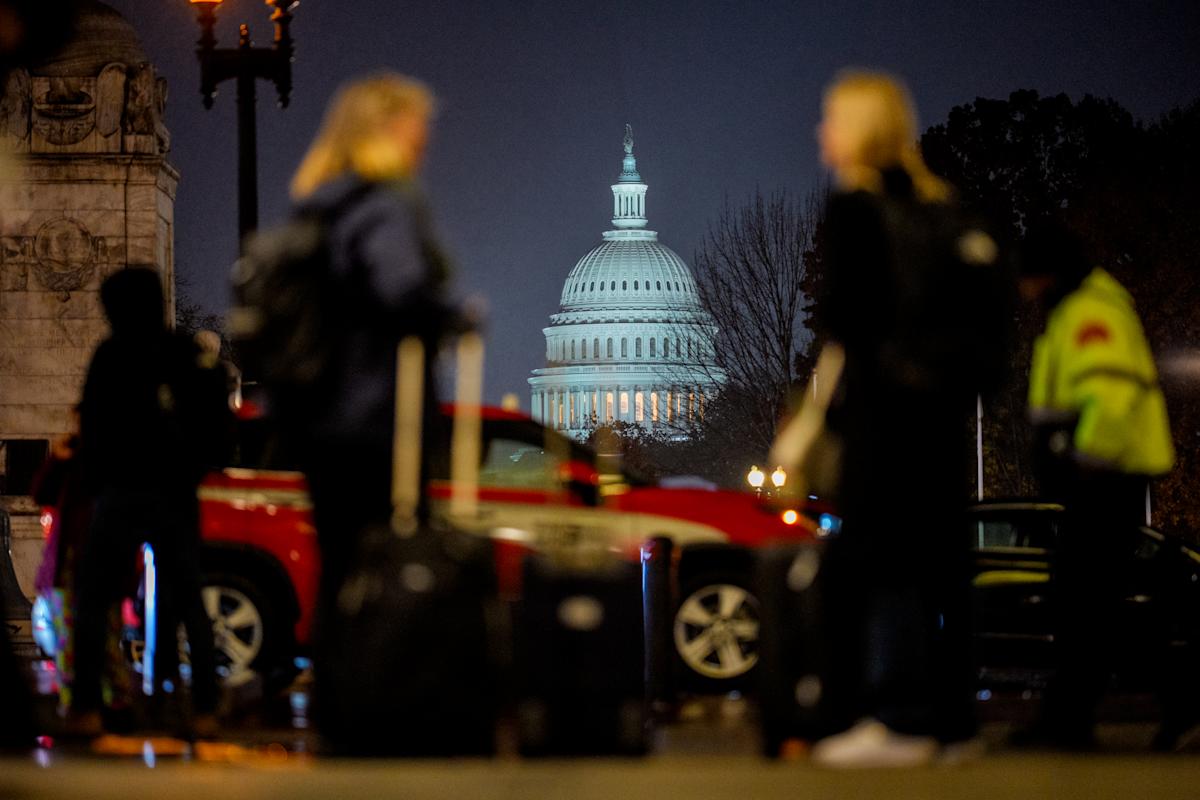
The dome of the US Capitol Building is visible from Union Station in Washington, D.C., on Nov. 25. (Andrew Harnik/Getty Images) ·Andrew Harnik via Getty Images
But any deal will need to be hammered out with the details very much in flux and large policy differences evident — such as whether to simply extend the subsidies, enact new income limits alongside an extension, or even pursue deeper reforms around things like health savings accounts.
The challenges ahead were evident over the weekend as Democrats in Sunday show television appearances repeatedly raised the issue while acknowledging that success is far from a sure thing.
“We are going to be very united in the fight coming up over the coming weeks,” Sen. Chris Van Hollen, a Maryland Democrat, promised on ABC’s “This Week” before acknowledging Republicans appear opposed. “We’ll see how that plays out.”
Another front to watch is artificial intelligence, with the text of the National Defense Authorization Act expected to be finalized this week. The question for markets is largely whether any moves related to AI are included.
One possible inclusion in that annual megabill is a proposal to block states from regulating AI.
Trump has pushed that idea directly, posting recently on Truth Social that “overregulation” at the state level is threatening America’s AI competitiveness. “Put it in the NDAA, or pass a separate Bill, and nobody will ever be able to compete with America,” he added.
A similar effort was launched earlier this year to incorporate this idea into the One Big Beautiful Bill, but it was scuttled by opposition from some Senate Republicans, including Sen. Marsha Blackburn of Tennessee.
Sen. Marsha Blackburn is seen at the Capitol in October. (AP Photo/Manuel Balce Ceneta) ·ASSOCIATED PRESS
Another front in the AI debate is a bill called the GAIN AI Act, which would give US companies a spot at the front of the line in acquiring advanced AI chips over rival companies from countries like China.
Nvidia CEO Jensen Huang will be in Washington on Wednesday for an event on securing US leadership in AI. He’s also set to make a stop on Capitol Hill to directly lobby against inclusion of the GAIN AI Act, according to Punchbowl News.
Ben Werschkul is a Washington correspondent for Yahoo Finance.



Leave a Comment
Your email address will not be published. Required fields are marked *