Trump Outlines Plan to Unwind Biden-Era Car Mileage Mandates
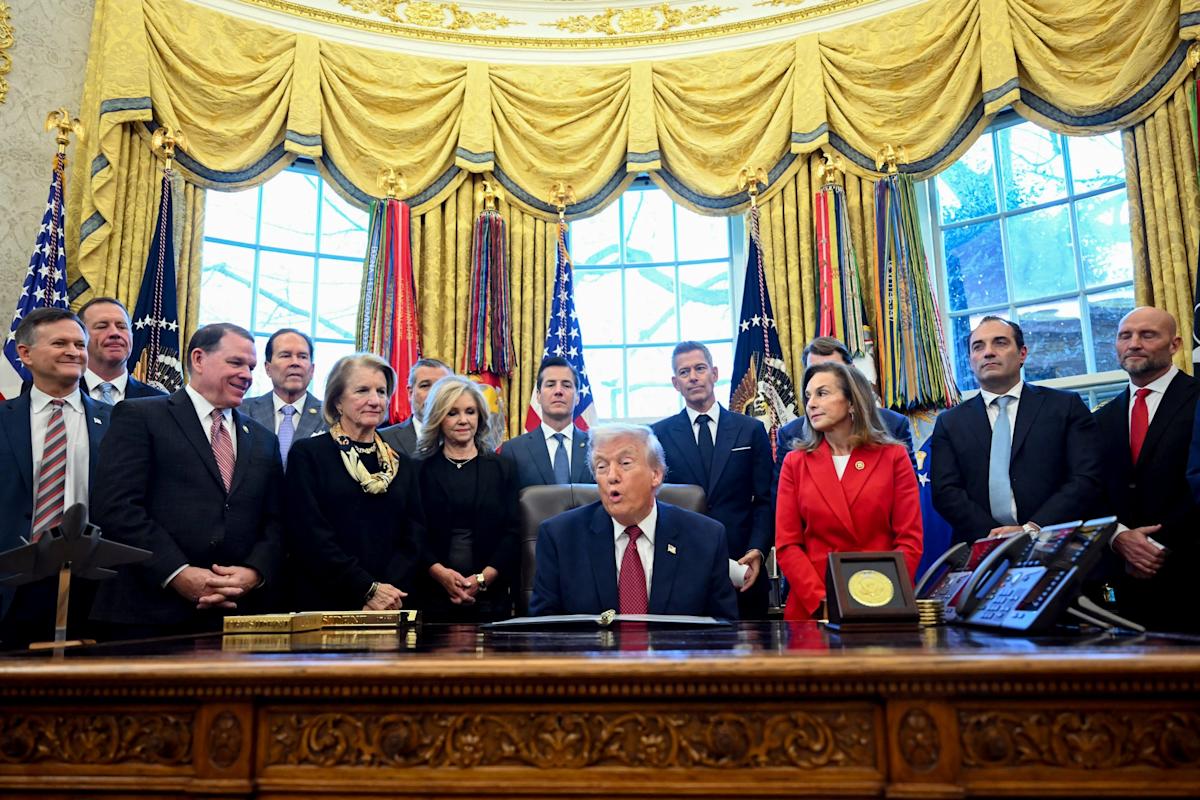
US President Donald Trump during an announcement in the Oval Office of the White House in Washington on Dec. 3.
(Bloomberg) — President Donald Trump unveiled his administration’s plan to relax stringent Biden-era fuel efficiency standards, casting the change as a way to lower consumer costs.
Most Read from Bloomberg
“Today my administration is taking historic action to lower costs for American consumers, protect American auto jobs and make buying a car much more affordable for countless American families — and also safer,” Trump said in an Oval Office event Wednesday with representatives from Detroit’s major automakers.
Trump was joined by Stellantis NV Chief Executive Officer Antonio Filosa, Ford Motor Co. CEO Jim Farley and John Urbanic, plant manager at General Motors Co.’s Orion Assembly plant outside Detroit.
The Transportation Department proposal, which still must go through a formal rulemaking process and could be finalized next year, represents the administration’s latest bid to unwind a suite of policies spurring electric vehicle production that Trump has derided as an “EV mandate.”
At issue are Corporate Average Fuel Economy requirements for cars and light trucks that were tightened under former President Joe Biden. Under those Biden-era standards, automakers must achieve an average of about 50 miles per gallon across their 2031 model-year vehicles.
The new Trump administration proposal would lower that requirement to 34.5 mpg for the 2031 model year. The measure also would eliminate a credit-trading program used by automakers to comply with the requirements, starting with the 2028 model year.
Trump said Biden’s policies were “ridiculously burdensome” and “imposed expensive restrictions and gave all sorts of problems to automakers.”
President Donald Trump unveils a plan to relax Biden-era fuel efficiency standards. He calls them expensive and burdensome. “Today my administration is taking historic action to lower costs for American consumers, protect American auto jobs and make buying a car much more affordable for countless American families — and also safer,” Trump said in an Oval Office event Wednesday with representatives from Detroit’s major automakers. The new proposal would lower the corporate average fuel economy requirement to about 34.5 mpg for the 2031 model year and eliminate a credit-trading program used by automakers.Source: Bloomberg
Trump’s proposal represents a major win for the auto and oil industries that complained the requirements pushed the bounds of available technology for getting more miles out of each gallon of gasoline, effectively discouraging the sale of traditional gas-fueled combustion engines in favor of emission-free electric models. Automakers had been expected to sell more electric vehicles to help hit the fuel-efficiency targets charted under Biden, as well as related federal limits on tailpipe pollution.
The American Fuel and Petrochemical Manufacturers association, which represents oil refiners, praised the proposal for returning to “a solid legal footing.”
Critics said Wednesday’s proposal will encourage US automakers to produce less-efficient gas guzzlers, narrowing consumer choice.
Trump already signed legislation lifting penalties on automakers that fail to fulfill the fuel economy standards and ending a consumer tax credit for electric vehicle purchases. His Environmental Protection Agency also has proposed repealing limits on the greenhouse gas emissions from cars, pickups and heavy-duty trucks.
“This CAFE standard that is aligned with customer demand is the right move,” Farley said alongside Trump. “This allows us to invest in affordable vehicles made in the US.”
Affordability Push
Trump’s announcement comes as the administration looks to counter cost-of-living fears, with higher prices for consumer goods, electricity, and some imports stoking concern about the president’s stewardship of the economy and raising political risks for Republicans ahead of next year’s midterm elections.
New car prices topped $50,000 on average for the first time in September, climbing as domestic automakers prioritize profitable high-end, feature-laden models over lower-margin, entry-level cars.
The Trump administration said its proposal would save Americans $109 billion over the next five years. Families could see savings of $1,000 on the average cost of a new vehicle, according to the administration’s projections.
The Biden-era plan “twisted mileage standards to create an electric vehicle mandate — jacking up car prices for American families and forcing manufacturers to produce vehicles no one wanted,” Transportation Secretary Sean Duffy said in a statement.
Although the Trump administration is casting the fuel economy change as an economic windfall, environmentalists say it will translate into added gasoline costs for American families. A retreat from the Biden-era standards that effectively lowered average fuel needs, they say, puts Americans on the hook to buy more gasoline.
“This isn’t about saving money for drivers or automakers — it’s about boosting oil companies’ profits,” said Kathy Harris, a director at the Natural Resources Defense Council. “Turning back the clock on even just three years of fuel economy progress means that drivers pay thousands more at the gas pump over the lifetime of their vehicles.”
The standards being targeted by Trump were predicted to have cut gasoline consumption by almost 70 billion gallons through 2050 and, according to the Biden administration, would save US consumers more than $23 billion in fuel costs. That would translate to about $600 in savings over an individual vehicle’s lifetime.
A driver refuels at a gas station in San Francisco on Nov. 26.Photographer: David Paul Morris/Bloomberg
Still, gasoline prices have fallen during Trump’s second term, down to $2.99 per gallon of unleaded on Tuesday, according to AAA, from $3.13 Jan. 20, when he took office. Trump has touted those falling fuel costs as an economic victory.
Automakers will have no trouble meeting Trump’s proposed standards, said Sam Abuelsamid, vice president of market research firm Telemetry. The 34.5 mile-per-gallon standard in the proposal translates to about 24 MPG in real-world driving, due to quirks in how efficiency is measured in lab tests, he said.
Asian automakers are already in compliance and European manufacturers could get there easily. US carmakers should also have clear path to achieve the standards, especially if they keep electric vehicles in their portfolio, he said.
“The issue won’t be compliance,” Abuelsamid said. “If the industry builds only to that standard, the issue will be domestic automakers will have a lineup of products that are unsellable in the rest of the world.”
Auto Executives
In just a few years, Detroit’s biggest automakers have gone from hailing the EV revolution to cheering Trump’s deregulatory agenda and the billions it will save them in compliance costs, as well as financial penalties that Congress eliminated.
The Oval Office ceremony captured the industry’s long simmering complaints that the Biden-era standards were pushing the industry too aggressively into EVs, even as many industry leaders consider the technology critical to their long-term competitiveness.
GM CEO Mary Barra, who was not present at the White House event, captured that sentiment when she reiterated GM’s commitment to battery-powered cars while speaking at the New York Times Dealbook conference earlier on Wednesday.
“People choose an EV because it’s a better performance vehicle and it fits their life,” Barra said, not because “regulation forces us.”
Trump ordered the elimination of subsidies and other measures boosting electric vehicles hours after taking office. Duffy also swiftly directed the NHTSA to rewrite the existing fuel economy standards, arguing they are “artificially high” and inconsistent with Trump’s policy to promote the production, distribution and use of domestic oil, natural gas and biofuels.
To justify the change, NHTSA has argued the Biden-era standards improperly included battery-electric cars and other alternative fuel vehicles when dictating future fleet requirements.
Environmentalists say the proposal flouts a requirement under federal law for corporate average fuel efficiency standards to be set at the “maximum feasible” level.
“The cure for pollution and high gas costs is strong fuel economy standards, not killing them as a favor to the president’s Big Oil, Big Auto and OPEC golf buddies,” said Dan Becker, director of the Center for Biological Diversity’s Safe Climate Transport Campaign.
–With assistance from Keith Naughton.
(Updates with auto executive, analyst comment starting in the 11th paragraph.)



Leave a Comment
Your email address will not be published. Required fields are marked *