
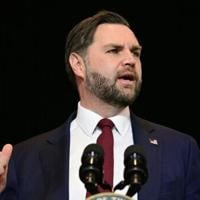

US Vice President JD Vance arrived in Armenia on Monday, before a scheduled trip to Azerbaijan, as Washington seeks to consolidate a peace process between the neighbours.
Vance is the most senior US official to visit Armenia, where he is also expected to advance a flagship project to improve road and rail infrastructure in the region.
His visit to Armenia — until recently a close Russia ally — comes as Moscow’s influence has dwindled in the region since its 2022 invasion of Ukraine.
At a White House summit in August 2025, US President Donald Trump brokered an agreement between Armenia and Azerbaijan that saw the two countries commit to renouncing claims on each other’s territory and refrain from using force.
The arch-foes have fought two wars over the Karabakh region in recent years.
Azerbaijan finally seized the mountainous territory in a lightning offensive in 2023, ending three decades of rule by Armenian separatists.
On Monday, Vance held talks with Armenian Prime Minister Nikol Pashinyan and will head to Azerbaijan’s capital Baku on Tuesday.
“We are not just making peace for Armenia. We are also creating real prosperity for Armenia and the United States together,” Vance told a news conference alongside Pashinyan.
He announced a US drone technology sale to Armenia worth $11 million.
Pashinyan called the visit “truly historic” and said he had “great hope” that President Donald Trump would “rightfully” receive the Nobel Peace Prize for mediating the Armenian-Azerbaijani peace process.
The two also signed a civil nuclear energy agreement, which Pashinyan said “will open a new chapter in the deepening energy partnership between Armenia and the United States”.
– Regional communications –
The US State Department said the visit would “advance President Donald Trump’s peace efforts and promote the Trump Route for International Peace and Prosperity (TRIPP)”.
The TRIPP is a proposed road-and-rail corridor designed to link Azerbaijan with its Nakhchivan exclave, cut off from the mainland by Armenian territory, while integrating the region into a wider east-west trade route connecting Central Asia and the Caspian basin to Europe.
Washington has presented the project as a confidence-building measure following decades of conflict between the two countries.
Azerbaijan sees the opening of regional communications as the main precondition for signing a comprehensive peace treaty with its rival.
US Secretary of State Marco Rubio and Armenian Foreign Minister Ararat Mirzoyan announced in January an implementation framework for TRIPP, building on commitments made at the White House summit last year.
The framework stresses sovereignty, territorial integrity and reciprocity, while promising economic gains for both Armenia and Azerbaijan through expanded trade and transit.
– Shifting alignments –
US officials say the route would also strengthen regional connectivity and bolster American commercial interests by opening new supply chains that bypass Russia and Iran.
Few details of Vance’s programme have been disclosed but the visit comes as Washington seeks a larger diplomatic and economic footprint in the South Caucasus and as regional alignments shift.
More than 20 Armenian human rights groups sent an open letter urging Vance to help secure the release of Armenian detainees in Azerbaijani jails.
A handful of Karabakh refugees held a rally outside the meeting venue, urging Vance to press for the prisoners’ release.
Last week, an Azerbaijani military court handed lengthy sentences, including life jail terms, to Armenian separatist leaders in a war crimes trial.
Armenia — historically Russia’s outpost in the South Caucasus — has frozen its participation in a Moscow-led security pact and moved to deepen ties with the United States and the European Union.
Russia’s influence across the former Soviet Union has been strained since its invasion of Ukraine, which has spooked many of the countries that were for decades dominated by Moscow.
Vance will not go to Georgia, which was once Washington’s key ally in the region.
US-Georgian ties have faltered after what US officials have described as Tbilisi’s democratic backsliding and a pro-Russian tilt, prompting Washington to suspend a strategic partnership agreement.
mkh-im/asy/phz