

The Fed’s December interest rate meeting could be ‘off the charts’
A version of this article originally appeared in Quartz’s Washington newsletter. Sign up here to get the latest business and economic news and insights from Washington straight to your inbox.
In August 2003, Federal Reserve Chair Alan Greenspan kicked off the annual Jackson Hole gathering for economic policymakers with a speech acknowledging the trickiness of steering the U.S. economy through interest rates.
“Uncertainty is not just an important feature of the monetary policy landscape, it is the defining characteristic of that landscape,” Greenspan said at the time. He described the Fed’s job as a constant exercise in “risk management” to ensure both stable prices and full employment, the main responsibilities assigned to the central bank.
Those words can just as easily be applied to the Federal Reserve’s next two-day meeting scheduled for Dec. 9 and 10. For the Fed, it’s shaping up to be another exercise in balancing the clashing risks of a weakening labor market and rising prices while the federal government is still catching up on publishing employment and inflation data reports.
“To my knowledge, it’s totally unprecedented,” said David Wilcox, a senior fellow at the Peterson Institute of International Economics who helped Greenspan craft his 2003 speech, adding it was “off the charts.” He compared the current situation to a person driving a car with a foggy windshield.
Fed policymakers will be equipped with aging government data, as September jobs and inflation reports are the latest data releases available to them. The Bureau of Labor Statistics canceled the dual October reports and scheduled November’s data releases for mid-December.
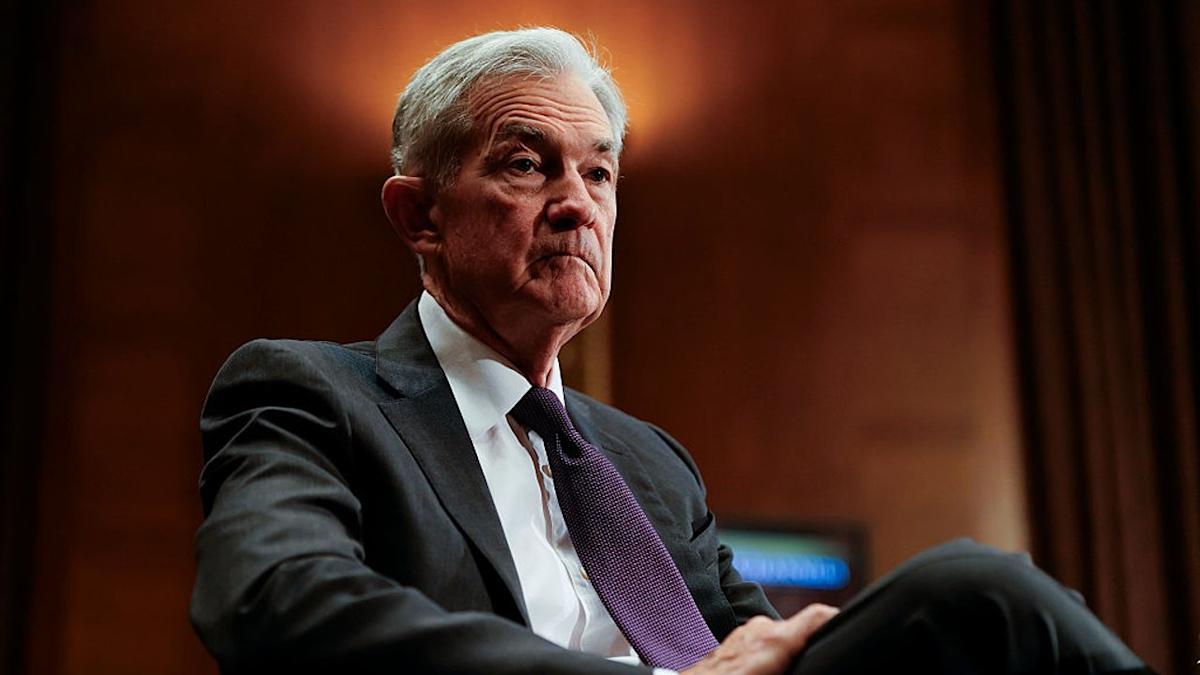
Now, Fed chair Jerome Powell must cobble together a majority on the 12-member Federal Open Market Committee that’s deeply split on what direction to take. Opposing wings have bubbled up: One favors lowering interest rates to salvage a sputtering labor market and another prefers to keep them unchanged to avoid sparking price hikes.
“The Fed has become more internally democratic,” David Wessel, director of the Hutchins Center of Fiscal and Monetary Policy at the Brookings Institution, told Quartz. “One Fed President said to me in the Greenspan years, you had the feeling if you talk too much in an FOMC meeting, Greenspan would push a button and an anvil would come down on your head. From [Ben] Bernanke on, it’s become much more of a functioning committee.”
Investors and financial analysts are expecting the Fed to slash interest rates by another quarter-point, the third and final such cut this year. At the last Fed meeting in October, Powell initially downplayed the possibility of another rate cut this month and called it “not a foregone conclusion.”
Leave a Comment
Your email address will not be published. Required fields are marked *