

Businesses slashed jobs at fastest rate in four years ahead of Budget

Businesses cut jobs at the fastest pace in four years last month as bosses battled rising labour costs and uncertainty surrounding the Budget.
Companies reduced their headcount by an average of 1.8pc in November, according to data from the Bank of England’s decision-maker panel of chief financial officers. It was the steepest fall since July 2021.
More pain is also still to come, however, as finance chiefs said they expected headcount to fall by a further 0.7pc over the next year. Annually, this is the highest forecasted drop since October 2020.
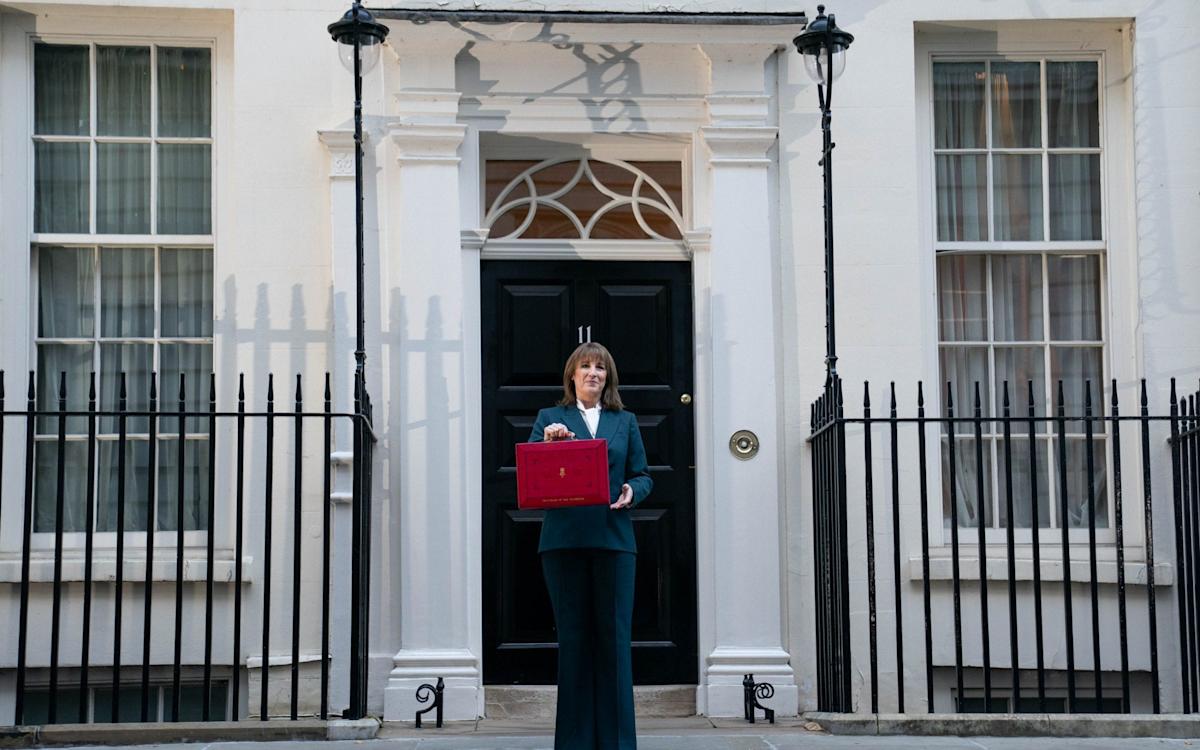
Businesses have repeatedly warned of job losses after Rachel Reeves, the Chancellor, raised employers’ National Insurance contributions (NICs) in her maiden Budget last year, alongside increases in the minimum wage.
Figures from the Office for National Statistics (ONS) showed that the unemployment rate climbed to 5pc in the three months to September, up from 4.3pc during the same period in 2024.
Some economists predict this could rise to a five-year high of 5.2pc next year.
Fears of reduced hiring stem largely from Ms Reeves’s decision to increase the minimum wage for young workers.
This includes an increase of 4.1pc to £12.71 for those aged 21 and over, while workers between 18 and 20 have been handed an 8.5pc jump to £10.85.
The Chancellor is pressing ahead with the changes, which will take effect next year, despite warnings that it could drive up youth unemployment.
As well as its impact on the jobs market, the recent wave of Budget uncertainty has also hit housebuilding.
The latest S&P Global UK construction purchasing managers’ index (PMI) declined to 39.4 in November, the lowest level since May 2020.
Tim Moore, of S&P Global Market Intelligence, said: “Commercial construction also faced severe headwinds during November as business uncertainty in the run-up to the Budget pushed clients to defer investment decisions.”
Employee numbers in the construction sector also fell for the eleventh month in a row as lower workloads and increased labour costs weighed on the industry.
Rob Wood, the chief UK economist at Pantheon Macroeconomics, said the figures indicated that the construction sector was facing “catastrophic conditions”.
He said: “The Budget focused on raising taxes to fund energy price giveaways and higher welfare spending rather than growth and construction-boosting measures. That will likely have disappointed builders.”
The new data came as figures from the British Retail Consortium and Sensormatic showed that footfall across the UK fell for the seventh month in a row in November.
Leave a Comment
Your email address will not be published. Required fields are marked *