US Seeks Big Investment From Taiwan While Lai Hints at Issues
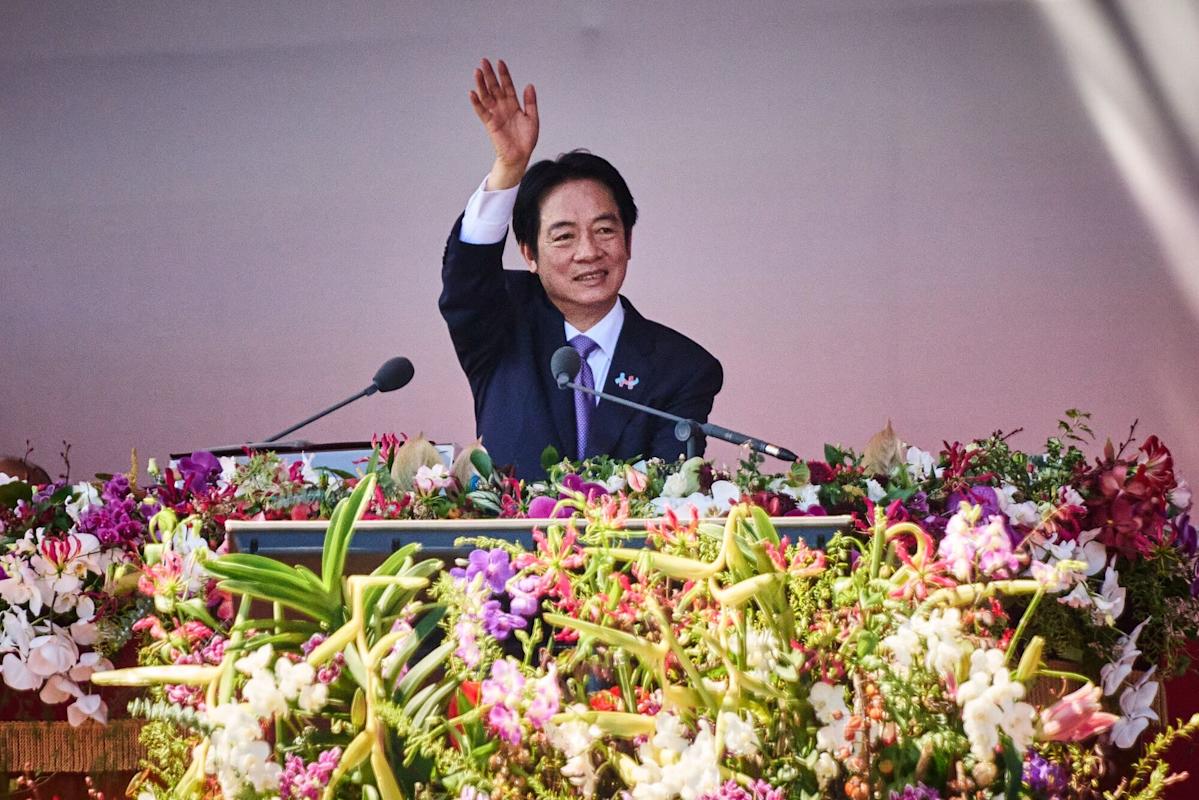
Lai Ching-te Photographer: An Rong Xu/Bloomberg
(Bloomberg) — Commerce Secretary Howard Lutnick said that the US is expecting a large investment pledge from Taiwan in trade talks, while the self-governing island’s president, Lai Ching-te, listed areas that need improvement in order for projects to be completed.
“We’re in the midst of discussions,” Lutnick said Wednesday in a CNBC interview. “But the fact is, this administration’s goal is to bring semiconductor manufacturing to America.”
Most Read from Bloomberg
Lai said separately on Wednesday that Taiwan is supportive of President Donald Trump’s goal of reindustrializing America, including efforts to ramp up semiconductor production. Such a goal would require the US to reduce its reliance on Taiwan as a key source of chips. To bring those plans to fruition, Taiwanese firms need some assurances on moves to facilitate investment, Lai said.
Lutnick in September said he wants between 40% and 50% of American semiconductor consumption sourced to US production.
“We understand President Trump’s sense of urgency,” Lai said in an interview recorded for the DealBook Summit hosted by the New York Times. “Whether this target of 40% to 50% can be achieved within this time frame depends not only on Taiwan’s support, but also on the US government’s ability to facilitate land acquisition, water and electricity supply, workforce and talent development and investment incentives.”
The president added: “If the US government manages to do this well and effectively, then this goal becomes much more achievable.”
Taiwan’s benchmark Taiex stocks gauge was little changed on Thursday in Taipei, while the Taiwan dollar was a tad stronger at 31.33 versus the greenback.
Wee Khoon Chong, senior market strategist at BNY in Hong Kong, said Taiwan’s currency was holding steady because the government in Taipei hadn’t released any figures on possible investment.
“Until concrete numbers appear, the currency is likely to trade based on broader fundamentals and market flows,” he said. “However, the possibility of a substantial investment pledge to the US is now on traders’ radar as a medium-term source of downside risk for the Taiwan dollar.”
The won slid in October after South Korea’s pledge to invest $350 billion in the US helped pressure the currency, prompting officials in Seoul to pledge to take action to stabilize markets if needed.
WATCH: US pushes for investment from Taiwan.Source: Bloomberg
Size of Investment
As for the magnitude of potential Taiwanese investment, Lutnick suggested he may be eyeing in excess of $300 billion.
“TSMC announced a $100 billion increase in their build in Arizona — up to $165 billion. Micron invested more. Texas Instruments invested more. So we’re up to, like, $300 billion in investment in America,” Lutnick said. “I think when we do a deal with Taiwan, that’s even going to be bigger.”
The Commerce chief didn’t indicate whether Taiwan Semiconductor Manufacturing Co.’s plans already are included in the administration’s hoped-for commitments from Taipei. TSMC, the world’s most advanced chipmaker, has vowed to keep expanding its US presence.
Lai also said that “we hope US tariff negotiations will not only help reduce the US trade deficit, but also deepen bilateral economic cooperation, further integrate Taiwan’s industries with the American economic structure and strengthen the Taiwan-US relationship.”
Taiwan said last month that it had proposed a model for investment in the US that would see its industries pursue global expansion independently, with the government providing financial guarantees. The US would offer administrative support and incentives to help Taiwanese companies secure land and regulatory assistance when establishing service parks in the US.
Lai added in his comments Wednesday that “our government supports TSMC and other Taiwanese semiconductor firms as they invest in the US, Japan, Europe or wherever they believe is needed. This contributes to global progress and prosperity.”
Publicity Push
Lai’s video appearance at the Times event marks his latest attempt to raise Taiwan’s profile through American media outlets, a strategy that counters China’s campaign to isolate the democracy on the world stage.
Last week, he announced in a Washington Post commentary that his government plans to spend an extra $40 billion on its defenses — a step that was intended to answer Trump’s campaign-trail criticism that Taiwan needed to do more to protect itself.
Earlier this year, Lai wrote in a Bloomberg News column that his government was committed to cutting trade imbalances with the US by purchasing more American energy, agriculture and other industrial goods.
Lai Ching-tePhotographer: An Rong Xu/Bloomberg
Taiwan counts on the US for political and military backing to ward off China, which sees the democracy of 23 million people as lost territory that must be brought under its control, by force if necessary.
Treasury Secretary Scott Bessent said earlier Wednesday that the US’s relationship with Taiwan “remains unchanged.” Asked if Washington would defend Taiwan against a Chinese incursion, he said, “I don’t answer hypotheticals.”
“The single point of failure for the global economy would be the disruption on chips from the island of Taiwan,” Bessent also said.
Asked whether US moves to reshore chip production would leave Washington less likely to defend Taiwan, he said that “it’s a flawed question.” He added, “Because you’re de-risking, that doesn’t mean you’ve changed anything.”
–With assistance from Philip Glamann and Cindy Wang.



Leave a Comment
Your email address will not be published. Required fields are marked *