
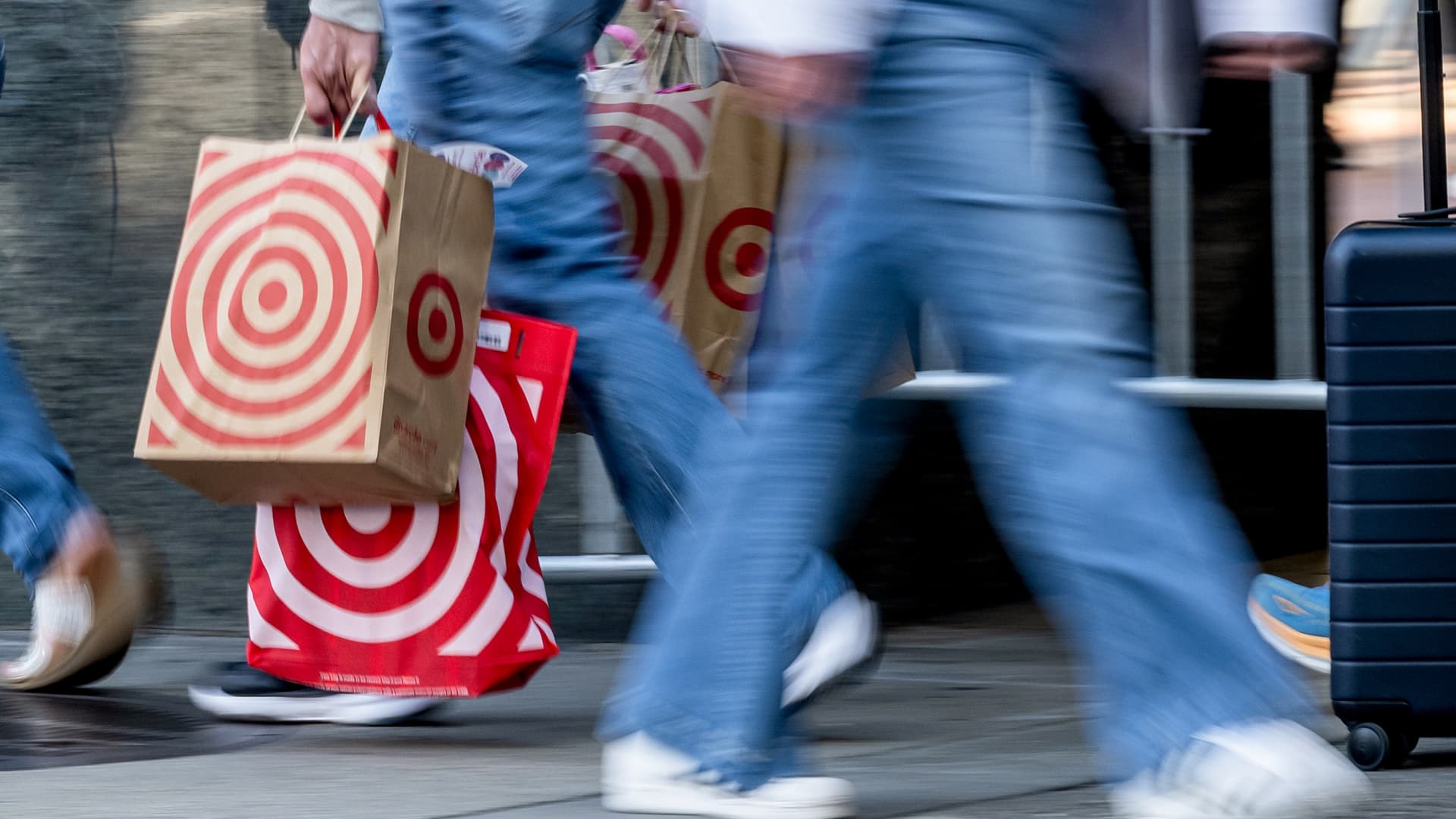

December retail sales were flat, falling well short of estimate
Consumer activity slowed sharply for the December holiday shopping season amid a spate of rough weather, tariff impact and persistently higher inflation, the Commerce Department reported Tuesday.
Retail sales were flat on the month following a 0.6% increase in November, according to numbers adjusted for seasonality but not inflation. Economists surveyed by Dow Jones had expected an increase of 0.4%. Excluding autos, sales also were unchanged, against the estimate for a 0.3% increase.
On an annual basis, sales rose 2.4%, a considerable step down from the 3.3% pace in November. Sales ex-autos were up 3.3% annually in December. A measure known as the “control group” of sales that excludes a number of items and feeds directly into gross domestic product calculations showed a 0.1% drop for the month.
The report puts a downbeat end to an otherwise solid year for shopping activity, with higher-end consumers spending briskly through much of 2025, though those on the lower end of the income spectrum were more cautious.
The shopping pace failed to keep up with inflation, as the consumer price index for December posted a 2.7% increase.
For December, multiple categories posted losses while only a few showed notable gains.
Miscellaneous retailers and furniture stores posted declines of 0.9%, while clothing and accessories stores were off 0.7%, and electronics and appliances saw a drop of 0.4%. Online outlets sales rose just 0.1%, while building materials and garden centers saw the strongest gain, up 1.2%.
“This is a K-shaped economy with strong spending from the top and much more cautious spending from middle- and lower-income consumers,” said Heather Long, chief economist at Navy Federal Credit Union. “Retail sales were flat in December, driven by soft spending on autos, home furnishings, appliances and clothing. These items were hard hit by tariffs in 2025 and consumers shifted their spending elsewhere.”
Fourth-quarter economic activity otherwise was strong, with the Atlanta Federal Reserve’s data tracker pointing to GDP rising at a 4.2% annualized pace. However, that number could be lowered Tuesday following the retail number. Consumer spending makes up more than two-thirds of all economic activity in the U.S.
The report comes a day ahead of the closely watched nonfarm payrolls count for January. Economists expect that to show an increase of just 55,000, following the 50,000 gain in December. However, several prominent Wall Street firms say they are looking for a lower number, with annual revisions due out that also are expected to shrink previous payroll growth.
In other economic news Tuesday, the employment cost index posted a seasonally adjusted 0.7% increase for the fourth quarter of 2025, according to the Bureau of Labor Statistics, below the 0.8% forecast. For the year, total compensation costs rose 3.4%, or a bit above the inflation rate. The quarterly rate was the slowest gain since Q3 of 2020.
The BLS also reported that import prices rose 0.1% in December, against a forecast decrease of 0.1%, and were unchanged from a year ago. Export prices increased 0.3% and were up 3.1% annually.