

Airbus counts cost of relying on single model
By Tim Hepher, Allison Lampert and David Shepardson
PARIS, Dec 5 (Reuters) – This week, Airbus got a brutal reminder that even the world’s most-delivered jet – the A320 – isn’t immune to shocks as disparate as solar flares and flawed metal.
Days after recalling 6,000 A320-series planes over a software glitch linked to cosmic radiation, the European giant was forced to slash delivery targets when defects surfaced in some of their fuselage panels.
The twin setbacks – one rooted in astrophysics, the other in basic metallurgy – underscore how fragile success can be for a planemaker that dominates the busiest corner of aviation and is on track to outpace Boeing for a seventh straight year.
“As we put one thing behind us, we have another,” CEO Guillaume Faury told Reuters as he weighed how many aircraft could be affected by problems with the thickness of panels.
“ICARUS BUG”
Last Friday, Airbus issued surprise instructions to airlines to revert to a previous version of software in a computer that directs the nose angle on some jets, several weeks after a JetBlue A320 tilted downwards, injuring about a dozen on board.
It blamed the issue on a vulnerability to solar flares that could, in theory, have caused the plane to lurch downwards – a brush with the sun reminiscent of Greek mythology as airlines scrambled to deal with a flaw nicknamed the “Icarus bug”.
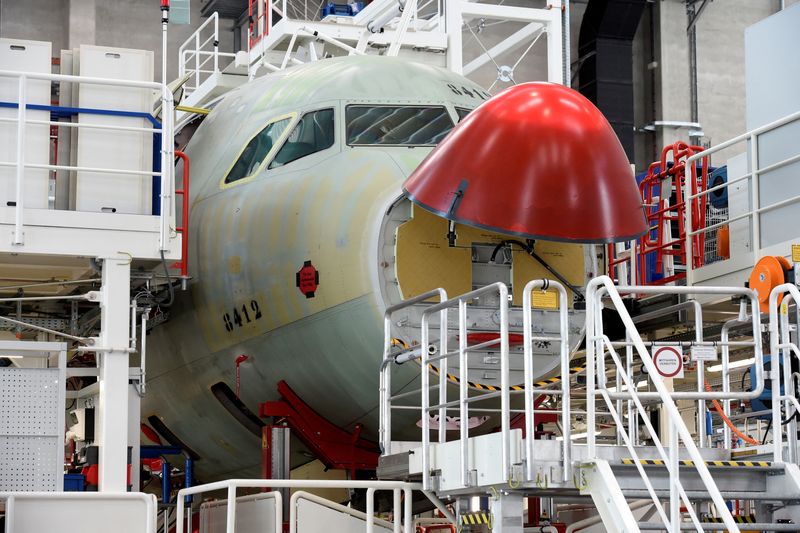
The rollback happened faster than expected but within days Airbus was grappling with a more humdrum issue threatening to cut short the year-end rush in plane deliveries: the discovery of flawed fuselage panels.
The glitch, first reported by Reuters on Monday, caused a sharp sell-off in the company’s shares as investors pondered how it would hit already shaky delivery targets for the year.
Within 48 hours Airbus had cut its target by 4% and on Friday it confirmed deliveries had already slowed in November.
The two unrelated setbacks came weeks after the A320 series, including the best-selling A321, surpassed the recently troubled Boeing 737 MAX as the most-delivered passenger jet in history.
“Airbus is at present an A321 machine,” said Agency Partners analyst Sash Tusa. “That extreme concentration on a single model has both strengths and vulnerabilities.”
The broader A320 medium-haul family accounts for most Airbus sales and the ‘vast majority’ of profit, he said, adding there were inconsistencies between Airbus lowering delivery targets and maintaining financial forecasts.
Airbus shares were down around 3% over the week having dropped as much as 11% on Monday.
Leave a Comment
Your email address will not be published. Required fields are marked *