

Economic Stress Has Americans Shifting from High-End Booze to Cheaper Bottles

Kevin Carter / Getty Images
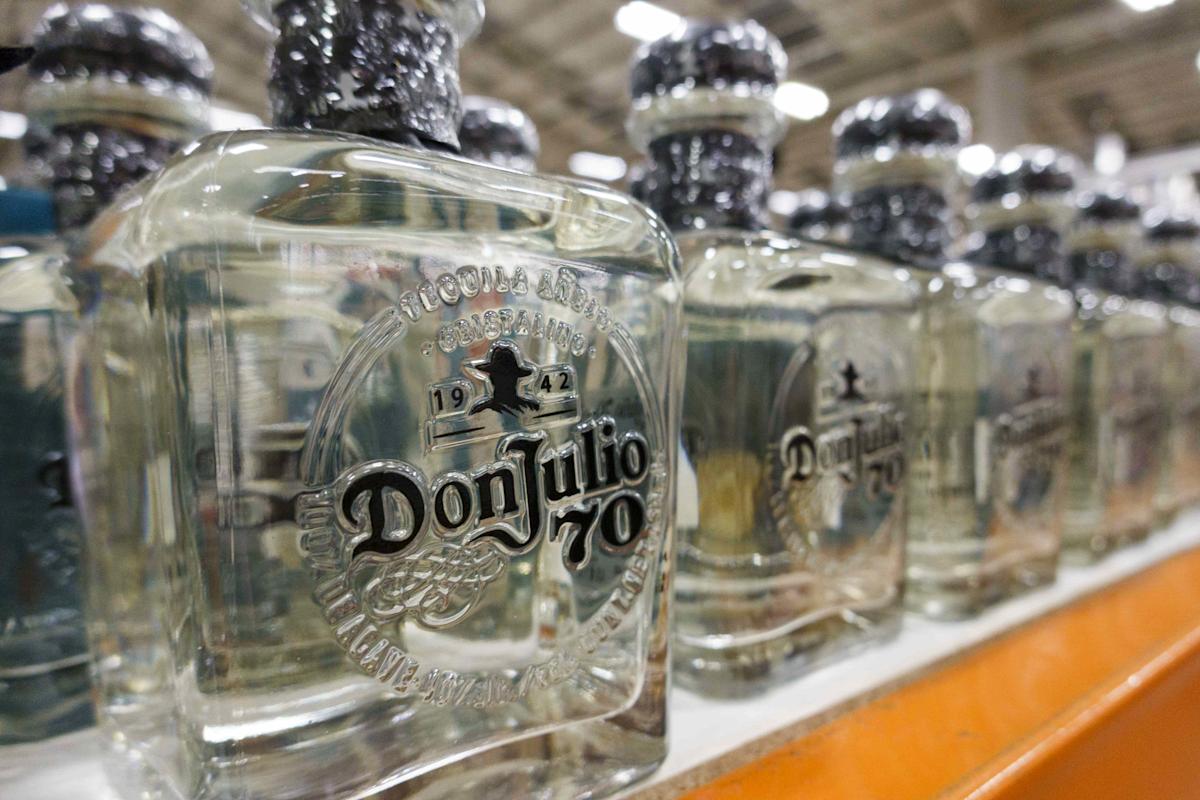
Don Julio and other high-end tequila sales have softened, Diageo PLC said.
-
Sales of spirits that cost $100 or more have plunged, and consumers are shifting from “super premium” to “premium” tequila, liquor-company executives said.
-
The business leaders said people “trading down” shows that Americans still want to buy and drink alcohol.
Fewer booze buyers are reaching for the top shelf.
Americans aren’t thirsting for for the high-end tequila that once flowed freely, spirits companies said, as demand for $100 spirits has dropped off. Consumers appear to be trading down—or selecting less expensive versions of their preferred beverage—said Lawson Whiting, CEO of Brown-Forman (BF.A, BF.B), on Thursday, as sales of more affordable bottles fell less.
“We are seeing some weakening, for the first time, in terms of trade down,” Whiting said on a conference call, according to a transcript made available by AlphaSense. “When you look at $100 and above or $50-to-$100 [segments], those price points have weakened considerably.”
Industrywide, the number of $100-plus bottles sold has fallen 18% in the past three months, according to the market research firm NielsenIQ.
Consumers are trying to cut back on booze amid concerns about the job market and inflation. Many are likely to step back first from discretionary items, such as fancy liquor or meals out.
Diageo, which makes Johnnie Walker and Crown Royal, said sales of its “super premium” tequila brands have weakened, including Don Julio, which can cost as much as $470 for a 750-ml bottle of Ultima Reserva, as well as Casamigos, which retails for $40 to $62, according to Total Wine & More quotes for New York.
Some customers are shifting to Astral, a “premium” alternative that Total Wine sells for $32, Diageo’s interim CFO Deirdre Mahlan said, explaining that the tequila category has also grown competitive as the spirit exploded in recent years.
The spirits companies offer a sign that consumers are cutting back on alcohol because of the economy, rather than in response to health concerns and changing norms, which are also reconfiguring consumption and spending in the sector.
Research shows younger Americans drink less than prior generations. Several factors may be at play: health and wellness is a bigger priority; some socializing has moved online; and disposable income is tight. Legal cannabis may also rival its appeal, and many are now buying non-alcoholic spirits and beers. But some companies believe money is at the root of the change.
“It’s largely economic,” Mahlan said last month, according to a transcript. “Look at the changes that we’re seeing in terms of trade down both in formats and price points.”
Leave a Comment
Your email address will not be published. Required fields are marked *