

Rwanda’s National Parks Offer True Wilderness Exploration, As Country Continues Conservation Push
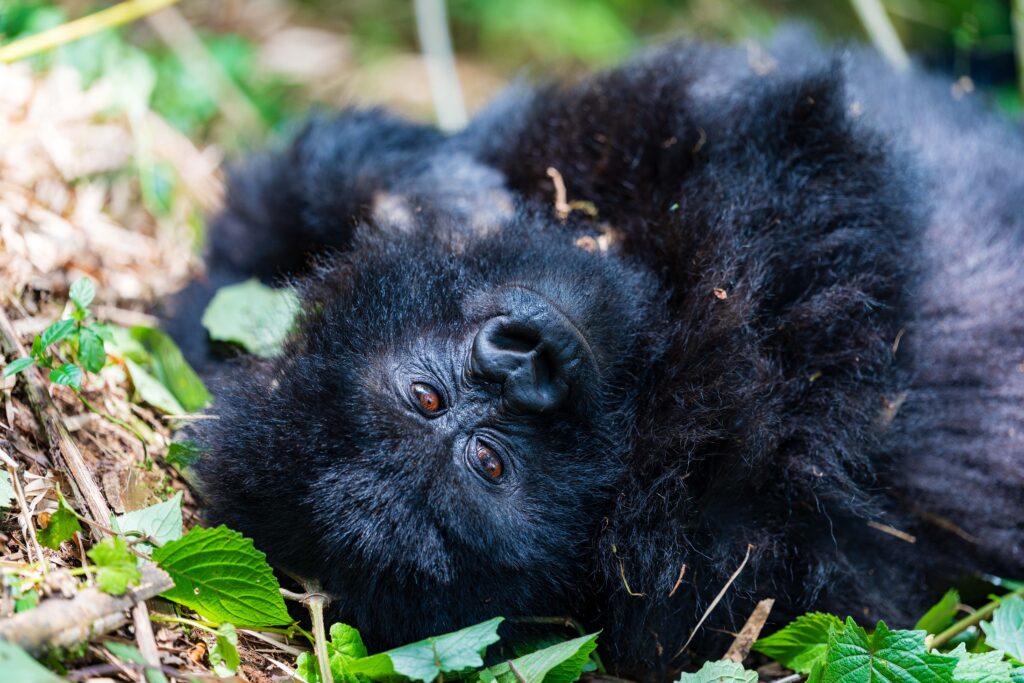
Rwanda’s famous Volcanoes National Park, home to the rare mountain gorillas, is set to expand over the next decade.
In early September, during the 20th Kwita Izina, Rwanda’s Gorilla Naming Ceremony, Prime Minister Justin Nsengiyumva announced the country and its conservation partners were beginning the process to expand its most internationally significant park by 23%.
It won’t be an easy or quick process, though. With private lands bordering Volcanoes National Park, there will be plenty of community involvement and, surely, payouts to move people farther from the mountain gorilla habitat. Currently, there is no timeline for when the park expansion will take place.
But just beginning the process shows Rwanda’s continued commitment to conservation, not just in the Virunga Massif, but across the country.
Conservation in Rwanda’s National Parks
On my recent trip to Rwanda, we were able to explore three of the four National Parks: Nyungwe, Akagera, and Volcanoes National Parks. The newest, Gishwati Mukura National Park, didn’t fit into our itinerary.
Each one is special in its own way, showcasing natural beauty and unbelievable wildlife encounters, with a commitment to conservation and keeping the land as pristine as possible.
Rebuilding Akagera’s Safari
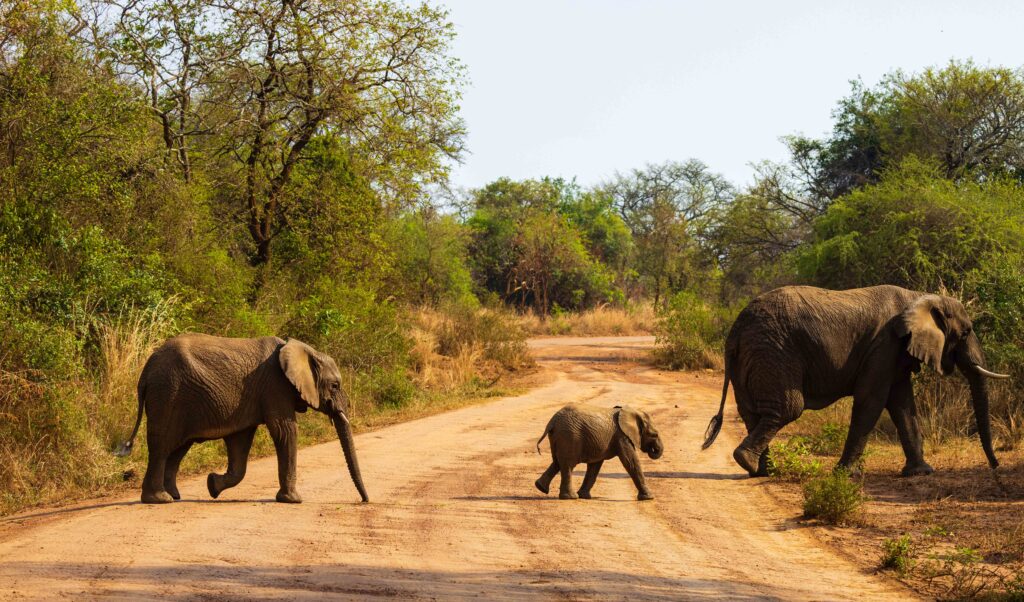
On the eastern edge of the country, Akagera National Park offers a traditional safari like many other African nations. But it wasn’t always that way. After the 1994 genocide, with the country’s population scattered, people settled into new areas. One of those places was the Akagera.
Soon after, human-animal conflict grew, with lions finding the new livestock easy prey. To combat this, locals poisoned the carcasses that the lions would feed on. By 1999, five years after the genocide, Rwandan lions were extinct.
In an effort not only to return Akagera National Park to its traditional ways and spur tourism growth, Rwanda reduced the park’s size by over 50%, erected a fence along its eastern boundary to keep animals away from the local community, and reintroduced lions into the park throughout the 2010s.
Now, in 2025, the park has had a rebirth. Lions are flourishing, rhinos have been reintroduced after being poached to zero, and Rwanda now boasts a Big Five Safari, which is incredible. Thanks to management from African Parks, a nonprofit organization that has taken over dozens of natural spaces across Africa, the community around the park is growing alongside its wildlife. Decades after the indescribable happened, the country, as one unified force, is thriving.
We had the chance to meet with some of the team in Akagera, and they showed us their animal-tracking system. They have staff on the ground every day throughout the park, monitoring the locations of specific animals, responding to potential poaching incidents, and even showing us the routes of collared animals.
Seeing how animals move around the park, with natural boundaries such as the Kagera River keeping them contained inside the park, was fascinating.
While the park is still growing up, the safari was one I’ll never forget. Getting to see my first lion, giraffe, zebra, and elephant in the wild was truly memorable.
Protecting Gorillas in Volcanoes National Park
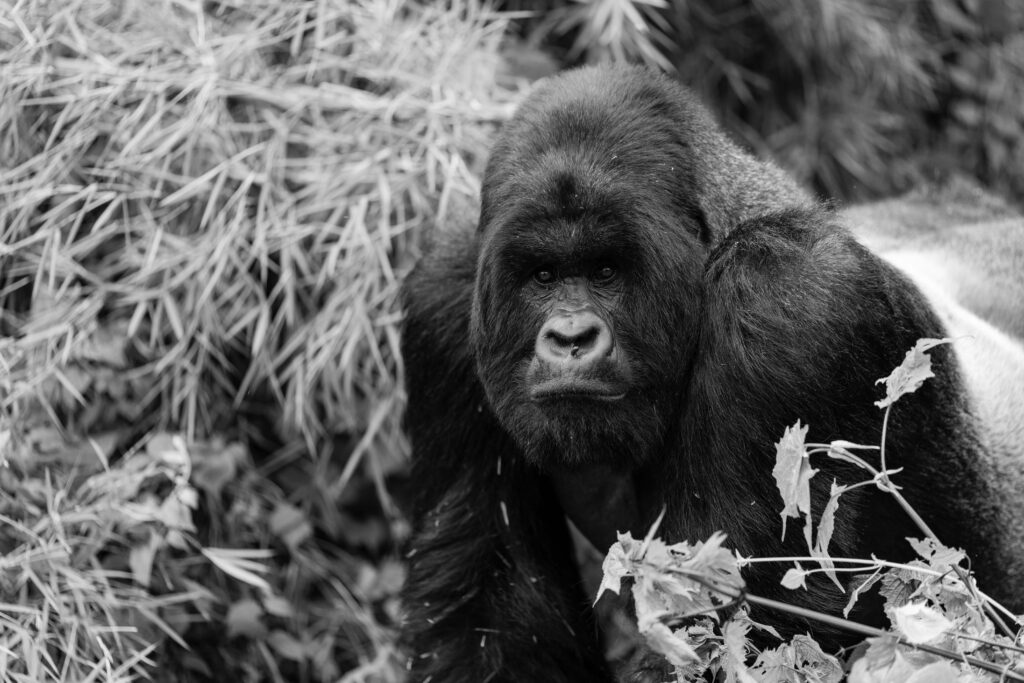
In the 1980s, scientists feared mountain gorillas would become extinct by the start of the millennium thanks to poaching and land encroachment. With population estimates as low as 240, that fear was real.
In the 30+ years since, Rwanda buckled down. It began prioritizing not only conservation of mountain gorillas but also building up the communities to see that keeping gorillas alive would impact them more than whatever they received from poaching.
Now, 15% of the gorilla trekking permits go directly to local communities. 10% of the $1,500 per-person fee supports infrastructure improvements, and the other 5% is a direct cash transfer. This decades-long shift to support communities living alongside gorillas has been an enormous success. Mountain Gorillas now number over 1,000 with a census currently underway which will likely show a sizeable increase. The last census was in the mid-2010s, as COVID disrupted the 2020 census.
Wildlife Plays a Big Role in Rwandan Tourism
I don’t discount anyone’s motives for promoting conservation, but it is not only for a better environment. Wildlife tourism plays a massive role in Rwanda’s economy.
The country is one of Africa’s poorest and doesn’t have significant natural resource exports like other nations. But they do have wildlife. And tourists want to see wild animals.
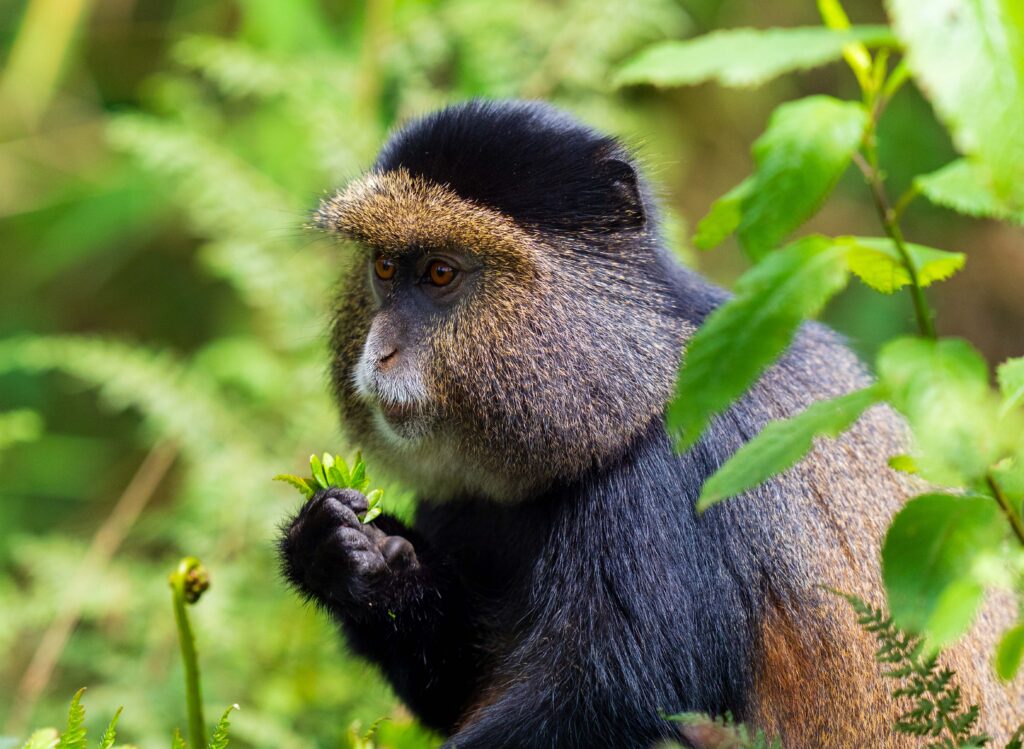
Over our 10 days in Rwanda, we had successful treks to see Golden Monkeys, Mountain Gorillas, and Black and White Colobus Monkeys in Nyungwe National Park, as well as a two-day safari in Akagera National Park. Our only unsuccessful trek was the Chimpanzee one, where we saw them for 90 seconds before they darted away.
Each one was phenomenal. Getting to see wildlife with your own eyes that you’ve only seen in zoos was magical, and also experiencing how a trek works from trackers, guides, and porters working as one to create a memorable experience for their guests.
As a wildlife photographer, I really appreciated being put in the best position to not only watch animals interact as they have for tens of thousands of years, but also to land photos I could only have dreamt of five years ago.
For those looking for a true adventure, Rwanda is everything you could ask for. The landscapes, culture, people, and animals will blow you away and create lifelong memories you’ll talk about for decades to come.