
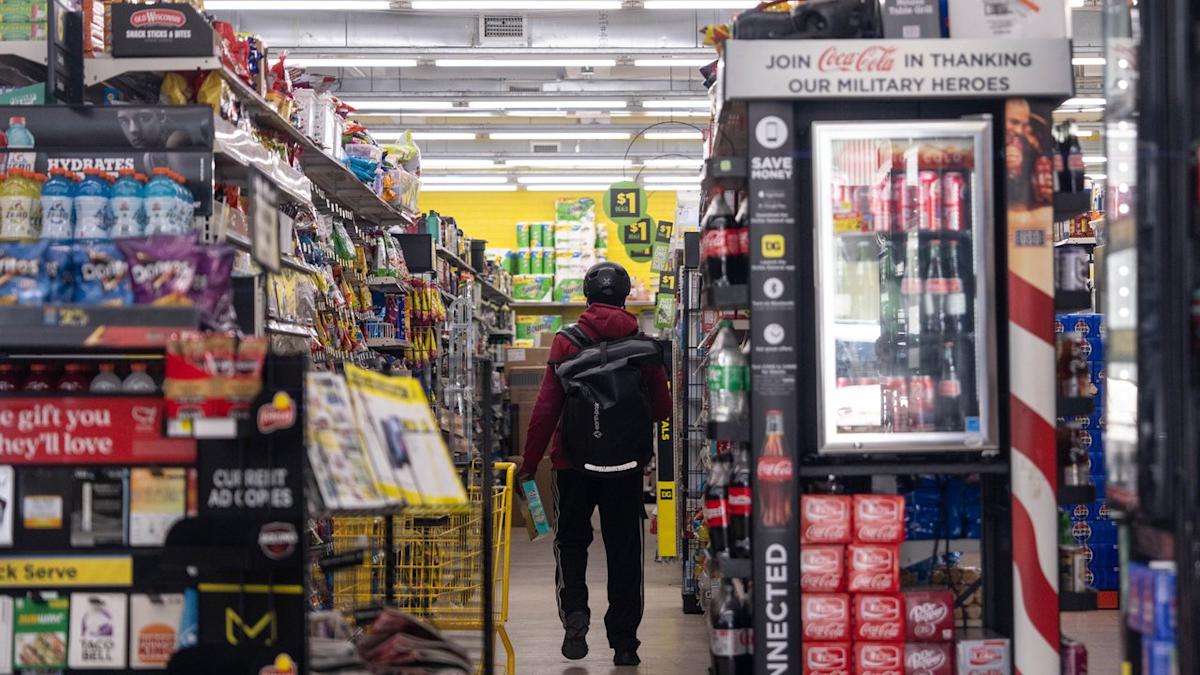

Dollar stores are winning. That’s a warning for the economy
Alongside Walmart and Dollar Tree, value-oriented chain Dollar General just posted one of its strongest quarters in years. And just as with those other retailers, the results point to a consumer economy under significant strain.
The discount giant on Thursday reported almost 5% sales growth to almost $11 billion, with same-store sales up 2.5%. This kind of trade-down activity, which sees shoppers moving from middle-of-the-price-point chains to more value-oriented stores, is often associated with economic downturns.
In other words, Dollar General’s quarter shows that Americans are still buying — but they’re trying hard to make their dollars stretch farther.
Increased traffic to stores led directly to Dollar General’s quarterly sales gains. But while traffic may have increased sales, it can’t fully account for Dollar General’s much-improved financial performance. For the quarter, management delivered a relatively dramatic margin turnaround. Gross margin expanded over 100 basis points, powered by decreasing shrink and smarter inventory management. Meanwhile operating profit surged 32% and EPS jumped 44%.
So for a retailer that has spent years battling store-level execution problems, this quarter marks a real operational reversal. Cleaner stores and thousands of Elevate and Renovate remodels appear to be making the chain more appealing on its own terms.
But Dollar General’s rise is also one more data point highlighting just how stressed the bottom half of the consumer economy has become. As CEO Todd Vasos put it, the chain is winning on “our value and convenience proposition” — corporate shorthand for shoppers looking for the cheapest viable option.
Across 2025, discounters have been the stealth winners of a challenging year. Dollar Tree’s blockbuster Halloween quarter showed shoppers hunting for small, affordable treats. Walmart’s banger third quarter was powered largely by grocery gains and trade-down behavior — classic recessionary signals.
Target, serving the squeezed middle of the income scale, continues to shrink.
And now Dollar General, which caters disproportionately to rural and lower-income households, is seeing accelerating traffic at a moment many retailers are struggling to coax shoppers through the door.
Higher-income households are still spending — often on services or luxury goods — while the bottom half is consolidating around value, essentials, and the cheapest possible milk, toilet paper, and toothpaste.
Leave a Comment
Your email address will not be published. Required fields are marked *