
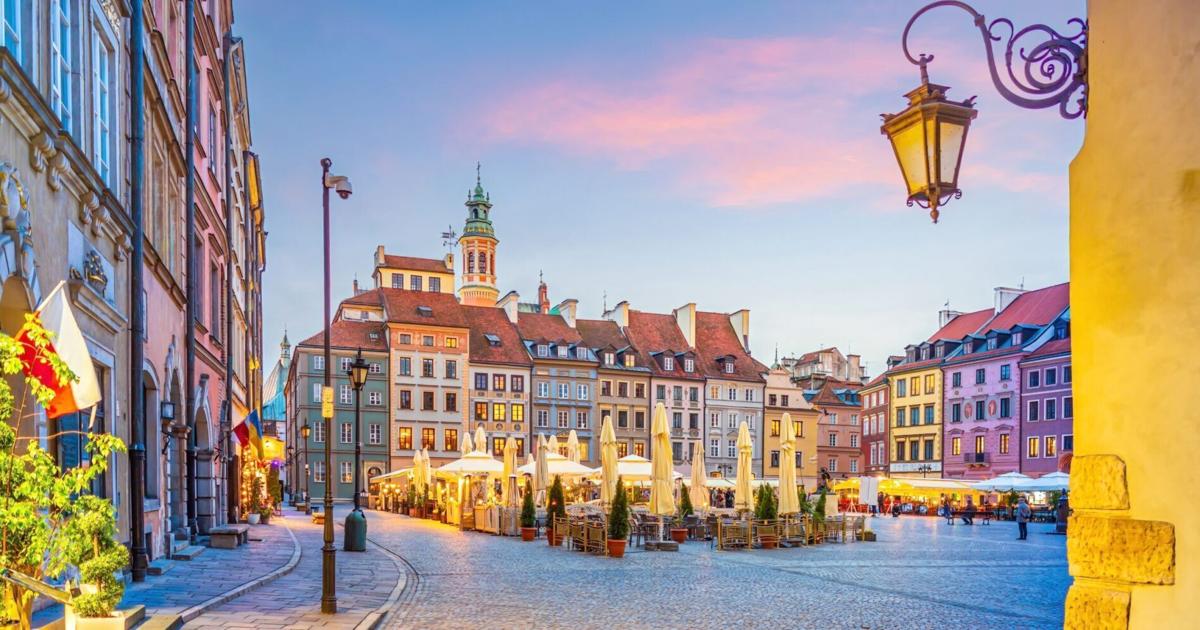

With hotel stays up 13% in early 2025, according to TVP World, and bookings in cities like WrocÅaw and Warsaw surging by as much as 215% during the shoulder season, HospitalityNet reports, Poland’s major cities are becoming increasingly popular choices for travelers.
Together, Poland’s five major cities — Warsaw, Kraków, WrocÅaw, Åódź, and PoznaÅ — offer a mix of well-known cultural centers and less familiar urban stops that are increasingly drawing international interest. While Warsaw and Kraków tend to dominate itineraries, cities like WrocÅaw, Åódź, and PoznaÅ have emerged as off-the-beaten-path alternatives with their own architecture, food scenes, and history. This overview serves as a quick guide to what travelers can expect in each of these urban hubs.
Warsaw

Photo courtesy of Veronika Primm.
Warsaw pairs reconstructed history with a modern creative edge. It’s Old Town — meticulously rebuilt after World War II and later recognized by UNESCO for the scale and accuracy of the reconstruction — centers around the city’s iconic Mermaid statue and the Royal Castle.
Just beyond the market square, the surviving section of the barbican hints at the city’s medieval defenses. Today, Warsaw complements these landmarks with a growing gastronomy scene, contemporary street art, and museums ranging from major national institutions to niche attractions such as the Polish Vodka Museum. The result is a capital that balances remembrance with forward-looking cultural energy.
Kraków
Photo courtesy of Veronika Primm.
Kraków remains one of Poland’s most visited cities, anchored by its expansive Main Market Square — the largest in the country — with the Renaissance-era Cloth Hall at its center. A short walk away, Wawel Castle overlooks the Vistula River and stands as one of the nation’s most significant historic sites. The city’s cultural depth extends into the surrounding area, with the UNESCO-listed Wieliczka Salt Mine located about 10 miles south.
Within Kraków itself, visitors often explore the former Jewish quarter of Kazimierz, now known for its synagogues, galleries and cafes, as well as the Schindler Factory Museum, which documents the city’s World War II history. These landmarks help explain why Kraków continues to hold a prominent place on Poland’s tourism map.
WrocÅaw
Photo courtesy of Veronika Primm.
WrocÅaw’s storybook appearance is one of its main draws, from the pastel-colored merchant houses surrounding the Rynek — Poland’s second-largest market square — to the ornate Gothic City Hall at its center. Scattered throughout the streets are a few hundred small bronze dwarf statues, a lighthearted feature that hints at the city’s layered past.
Nearby, the Salt Square hosts long-running flower stalls and small markets, while the narrow Hansel and Gretel houses, joined by an overhead archway, have become one of WrocÅaw’s most recognizable sights. The historic Butchers’ Street, also known as the Shambles, reflects the city’s medieval origins. A short walk away, Tumski Island and its cathedral offer a quieter look at WrocÅaw’s centuries-old architecture.
Åódź
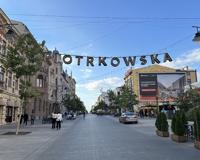
Photo courtesy of Veronika Primm.
Åódź stands apart from Poland’s other major cities. Long associated with its industrial roots and once nicknamed the “Polish Manchester” for its textile factories, the city has attracted notable admirers, including filmmaker David Lynch. Unlike most Polish urban centers, Åódź has no traditional main square; instead, its activity is concentrated along Piotrkowska Street, a 2.6-mile thoroughfare lined with shops, cafes, and historic facades.
The city’s industrial heritage remains visible in the many former factory complexes that have been refurbished into cultural venues, shopping centers, and event spaces. With its mix of raw history, creative redevelopment, and a growing culinary scene, Åódź offers an off-the-beaten-path alternative for travelers looking for something different.
PoznaÅ
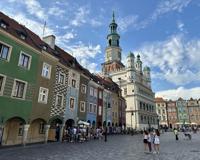
Photo courtesy of Veronika Primm.
PoznaÅ’s Old Market Square, the third largest in Poland, is known less for its size than for the striking architecture that surrounds it. The Renaissance City Hall draws crowds at noon, when mechanical goats emerge to butt heads above the clock tower, while the 16th-century merchant houses and colorful facades frame one of the country’s most atmospheric squares.
Beyond the center, PoznaÅ features sites such as the reconstructed Royal Castle and the early-20th-century Imperial Castle, the latter used by Nazi officials during World War II. The city is also considered Poland’s potato capital and is known for its regional specialty, the St. Martin’s Croissant. Its attractions span historic landmarks and newer spaces, such as the summertime KontenerArt zone along the river, giving PoznaÅ a distinctive balance of classical beauty and modern character.
What These Five Cities Reveal About Modern Poland
Together, these five major cities offer a cross-section of Poland’s history, culture, and contemporary energy. Warsaw and Kraków offer long-established appeal that contrasts with Å ódź’s post-industrial character, while WrocÅaw and PoznaÅ add their own mix of architectural landmarks and modern attractions. Travelers can choose among them based on their interests — from classic sightseeing to more off-the-beaten-path exploration — but each city represents a significant part of what Poland offers visitors today.