




(Photo by Towfiqu barbhuiya via Pexels)
By Stephen Beech
A “beer belly” can cause more damage to a man’s heart than just being overweight, warns new research.
German scientists using advanced imaging found that abdominal obesity – often referred to as a “beer belly” – is linked with more harmful changes in the heart’s structure than overall bodyweight alone, especially in men.
The findings also suggest proactive measures that doctors and patients can take to identify potential risks and intervene earlier to protect the heart.
These include preventing abdominal fat accumulation through regular exercise and sticking to a balanced diet.
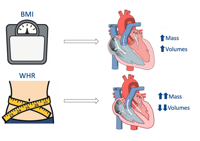
Study lead author Dr Jennifer Erley said: “Abdominal obesity, a high waist-to-hip ratio, is associated with more concerning cardiac remodelling patterns than high body mass index (BMI) alone.
“It appears to lead to a potentially pathological form of cardiac remodelling, concentric hypertrophy, where the heart muscle thickens, but the overall size of the heart doesn’t increase, leading to smaller cardiac volumes.
(Jennifer Erley, M.D., and RSNA via SWNS)
“In fact, the inner chambers become smaller, so the heart holds and pumps less blood.
“This pattern impairs the heart’s ability to relax properly, which eventually can lead to heart failure.”
Taking into account BMI, a measure of general obesity calculated from a person’s weight and height, and waist-to-hip ratio (WHR), a measure of abdominal obesity, the researchers studied cardiovascular MRI images of 2,244 German men and women, aged 46 to 78, without known cardiovascular disease.
Dr. Erley explained that abdominal obesity reflects an accumulation of visceral fat, which is stored deep around internal organs and strongly linked to harmful cardiovascular effects.
Using BMI, 69% of men and 56% of women in the study were overweight or obese.
According to WHR, 91% of the men and 64% of the women met the World Health Organization (WHO) criteria for obesity.

Sean S
Dr. Erley, radiology resident at University Medical Center Hamburg-Eppendorf, said: “General obesity based on BMI was more often linked to enlarged heart chambers across all participants.
“Abdominal obesity was associated with thickening of the heart muscle and smaller heart chamber volumes.
“These changes were more prominent in men, particularly in the right ventricle, which pumps blood to the lungs.
“This may reflect early cardiac stress on the heart related to how abdominal fat affects breathing and lung pressure.”
Obesity was also linked to “subtle” heart tissue changes in men, detectable only with advanced cardiac MRI, potentially signalling early heart stress before symptoms or diagnosable disease.
The associations persisted even after accounting for other cardiovascular risk factors, including high blood pressure, smoking, diabetes and cholesterol.
Dr. Erley said: “The sex-specific differences suggest that male patients may be more vulnerable to the structural effects of obesity on the heart, a finding not widely reported in earlier studies.

(Photo by Nicola Barts via Pexels)
“Rather than focusing on reducing overall weight, middle-aged adults should focus on preventing abdominal fat accumulation through regular exercise, a balanced diet and timely medical intervention, if necessary.”
She said the more extensive heart damage seen in men could be due to an earlier onset of more severe abdominal obesity, or the cardioprotective effect of oestrogen in women, although more research is needed.
Dr. Erley says people can use a tape measure to calculate their WHR at home by dividing their waist circumference at its narrowest point by their hip circumference at its widest point.
A ratio above 0.90 for men and 0.85 for women is an indicator of abdominal obesity and is associated with increased risk of cardiovascular disease, according to the WHO.
The research team also encouraged doctors to be proactive in checking and flagging abdominal obesity as early as possible.
Dr. Erley added: “From the perspective of a radiologist, when we see this cardiac remodelling pattern, we currently think of cardiomyopathy, hypertensive heart disease or some other form of disease, but we don’t clinically draw the line to obesity in our reports.
“This study should alert radiologists and cardiologists to be more aware that this remodelling could be attributed independently to obesity.”
The findings are due to be presented at the annual meeting of the Radiological Society of North America (RSNA) in Chicago.