
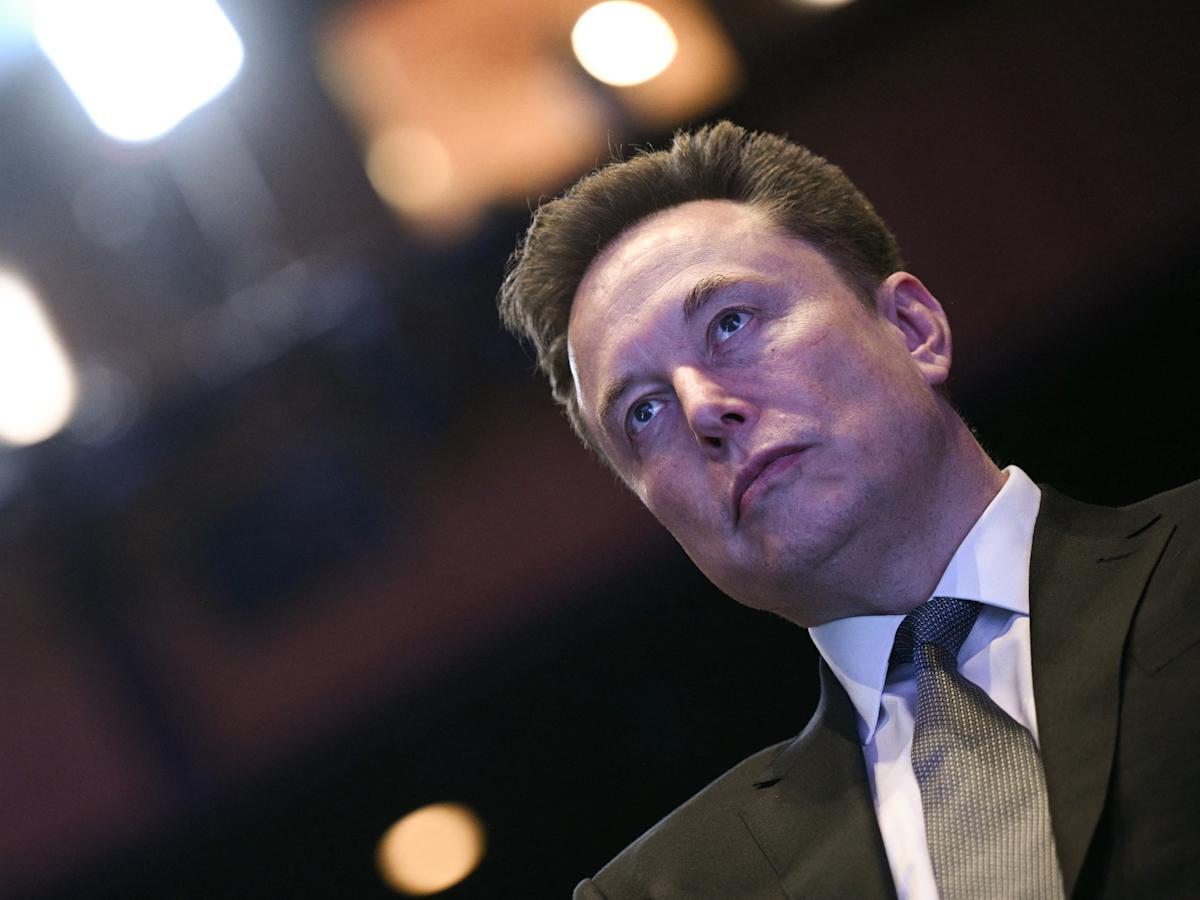

Elon Musk says AI will end America’s debt crisis within 3 years
-
Elon Musk says AI and robotics are the only way to solve the US debt crisis.
-
He predicted that growth in goods and services would outpace inflation within three years.
-
Musk said last month that his Optimus robot could eliminate poverty and the need for human labor.
Elon Musk says the US debt problem has only one escape hatch: AI.
Musk, in a conversation with investor and podcaster Nikhil Kamath published on Sunday, said that the only way out of America’s deepening fiscal hole is productivity driven by AI and robotics.
“That’s pretty much the only thing that’s going to solve for the US debt crisis,” said Musk. “It probably would cause significant deflation,” he added.
The national debt reached $38.34 trillion as of November 26 — more than double its value a decade ago, per data from the US Treasury.
AI has not yet boosted productivity enough to push economic output above the pace of inflation — but that’s about to change, Musk said.
“In three years or less, my guess is goods and services output will exceed the rate of inflation,” he added.
Musk said the advancements in AI and robotics would bring humans to “the point where working is optional,” likely in the next two decades.
Musk described this outcome as “universal high income,” a world where productivity is so high, and goods and services so abundant, that people don’t have to work to meet their basic needs.
Over the past few weeks, Musk has outlined his vision for how AI could remake the global economy.
At a Tesla shareholder event last month, the CEO said its Optimus robot could eliminate poverty and the need for human labor.
“People often talk about eliminating poverty, giving everyone amazing medical care,” Musk said at the shareholder event. “There’s actually only one way to do that, and that’s with the Optimus robot.”
Musk also said at the US-Saudi Investment Forum last month that money would “stop being relevant” in the future of AI.
“There will still be constraints on power like electricity and mass,” Musk said. “But I think at some point currency becomes irrelevant.”
Economists have long touted shorter workweeks from tech-enabled productivity boosts. John Maynard Keynes predicted in 1930 that future generations would work just 15 hours a week thanks to technological progress.
Tech leaders have been vocal about AI’s power to reshape the global economy.
Google CEO Sundar Pichai told the BBC in an interview last month that AI carries the “potential for extraordinary benefits” but will also spark “societal disruptions.”
Leave a Comment
Your email address will not be published. Required fields are marked *